
The Impact of Water Temperature on Chlorine Generation: Optimizing Electrochlorination Cell Efficiency and Longevity
In electrolytic water treatment systems, water temperature is never merely a passive environmental parameter; it is a critical thermodynamic driver that governs both reaction kinetics and electrolyte conductivity. Whether managing a commercial pool salt chlorinator or an industrial drinking water chlorination system, operational shifts in water temperature directly alter the internal resistance of the electrolyte solution, forcing passive adjustments in critical electrolysis parameters. Lower temperatures during winter inevitably lead to a severe deficit in chlorine output, while excessive summer heat waves actively trigger heavy mineral encrustation—both severely disrupting the stable operation of the infrastructure. This technical analysis deconstructs the precise electrochemical impact of temperature fluctuations on membraneless electrolytic cells and provides an empirical engineering protocol for year-round thermal operations, systematically maximizing electrochlorination cell efficiency while substantially extending electrode service lifespans.
Electrochemical Kinetics: The Direct Effect of Temperature on Salt Chlorinator Output
Water temperature and chlorine generation efficiency are fundamentally intertwined, operating under the strict laws of electrochemical kinetics. According to the Arrhenius activation principles, as the temperature of the water matrix scales upward, the kinetic energy of the saline solution increases proportionally. This thermal acceleration significantly speeds up the mass transfer and diffusion velocities of both sodium (Na+) and chloride (Cl-) ions toward the active catalytic zones.
This elevated thermal environment lowers the activation energy required for the electrocatalytic reaction at the electrode interface, increasing electron transfer rates. This shift translates directly into a steady, reliable expansion of the system’s total oxidizer output, underscoring the profound effect of temperature on salt chlorinator performance profiles. The global water treatment sector universally recognizes the operational window between 25°C and 30°C as the golden threshold for membraneless electrolytic cells. Within this specific temperature range, Century’s proprietary titanium-based anodes achieve their optimal catalytic state, generating rated sodium hypochlorite (NaOCl) capacities at the absolute lowest electrical power draw, minimizing Specific Power Consumption (SPC) and securing peak energy efficiency for the entire plant room footprint.
The Cold Water Dilemma: Electrical Resistance, Voltage Spikes, and Catalyst Stripping
Operating under cold water swimming pool chlorination conditions introduces severe challenges to routine facility maintenance protocols. When the raw water temperature drops below 15°C, the physical viscosity of the fluid rises, dragging down ionic migration speeds and causing an immediate, severe collapse in electrolyte conductivity.
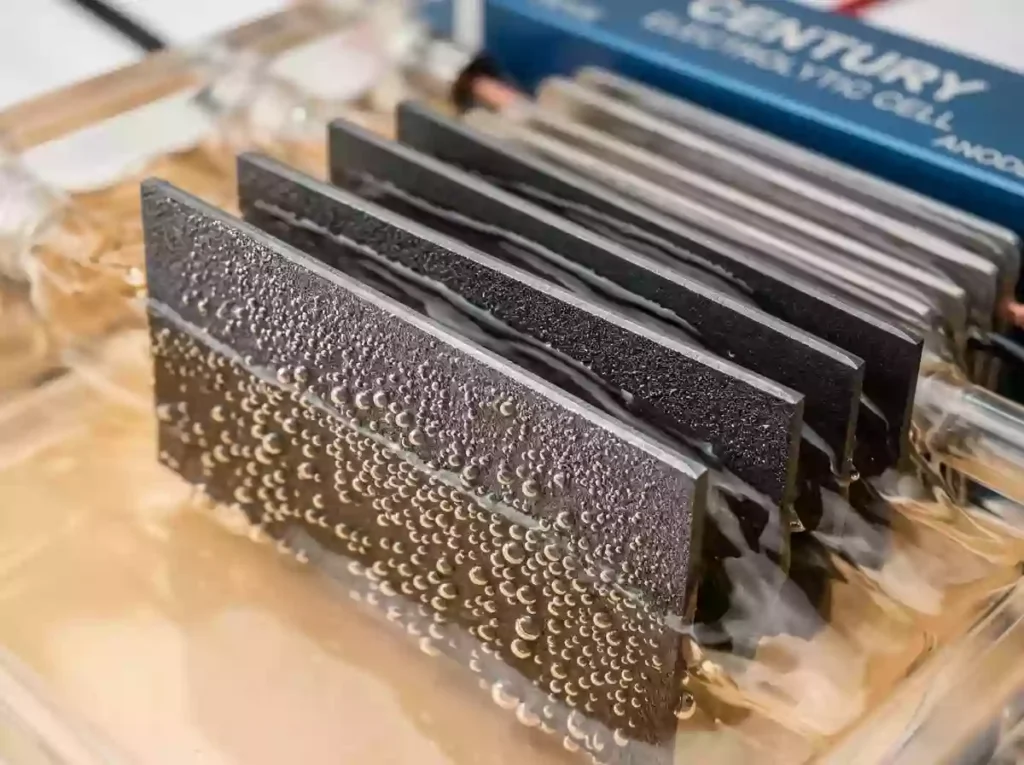
To maintain the rated chlorine output amperage under constant-current logic, heavy-duty commercial rectifiers will continuously and automatically ramp up the operational driving voltage across the cell, subjecting the system to a hazardous low-temperature, high-voltage stress profile. These excessive electrode overpotentials can trigger localized hydrogen embrittlement within the titanium lattice while forcing intense localized thermal accumulation. This electrical pressure creates microscopic gaseous entrapment and intense shear stress between the catalytic layers, leading to the progressive cracking, catalytic coating delamination, and stripping of the precious ruthenium-iridium mixed metal oxide (MMO) coating from the Grade 1 titanium substrate. Within cold water environments, this specific degradation mechanism stands as the most common and financially devastating root cause of premature electrolytic cell destruction.
High-Temperature Risks: Thermal Encrustation and Accelerated Mineral Scaling
Conversely, when water temperatures climb beyond the 35°C threshold, commercial salt chlorinator units face an aggressive and imminent risk of severe mineral scaling. During peak summer seasons in outdoor aquatic venues, thermal hot springs, and tropical installations, elevated water temperatures drive the langelier saturation index pool metric into a highly positive, scale-forming zone, forcing the water chemistry into an unstable equilibrium.
Unlike standard chemical solutes, the solubility of calcium carbonate (CaCO3) decreases inversely as water temperature increases, causing mineral crystals to rapidly precipitate out of the liquid phase. Compounding this risk, the cathode plates naturally and continuously generate highly alkaline sodium hydroxide (NaOH) as part of the standard electrolysis loop. This intersection of high localized alkalinity and high ambient water temperature creates a severe micro-environment that accelerates the bonding of dense, rigid calcium scale layers directly onto the warm titanium blade faces. This mineral encrustation forms an insulated, non-conductive barrier that not only chokes off efficient water temperature and chlorine generation workflows but impedes critical heat dissipation. The resulting uneven current distribution and intense thermal stress cause the active catalytic coatings to fracture and flake, drastically cutting down the service life of commercial electrochlorination machinery.
Operational Strategies for Seasonal Shifts: Managing Salt Gradients and Thermal Throttling
Mitigating the direct effect of temperature on salt chlorinator efficiency demands the strict execution of standardized, season-specific operational protocols. When dropping winter temperatures trigger a collapse in fluid conductivity, field technicians should implement a proactive salinity-gradient adjustment—temporarily boosting the standard salt baseline from 3,200 PPM up to an elevated 3,800 PPM. This increased ionic concentration counteracts the cold-induced electrical resistance, successfully clamping the driving salt cell voltage and temperature curves back into safe operating margins and shielding the infrastructure from high-voltage overpotential strain.
In severe cold water swimming pool chlorination environments where water temperatures drop below 10°C, forcing the system to run at full load is strictly non-viable. The standard industrial protocol dictates throttling the electrolytic cell output down to 30% capacity or transitioning the unit into an intermittent cycling mode, balancing the daily disinfection deficit by safely introducing supplemental, off-site liquid sodium hypochlorite. This specialized thermal-throttling routine effectively eliminates high-voltage stress across the titanium cells, ensuring flawless water quality compliance while prioritizing the structural integrity of the core noble metal assets to secure maximum long-term equipment lifespans.
Thermal Management in Century Engineering: Intelligent Rectification and Temperature-Compensated Automation
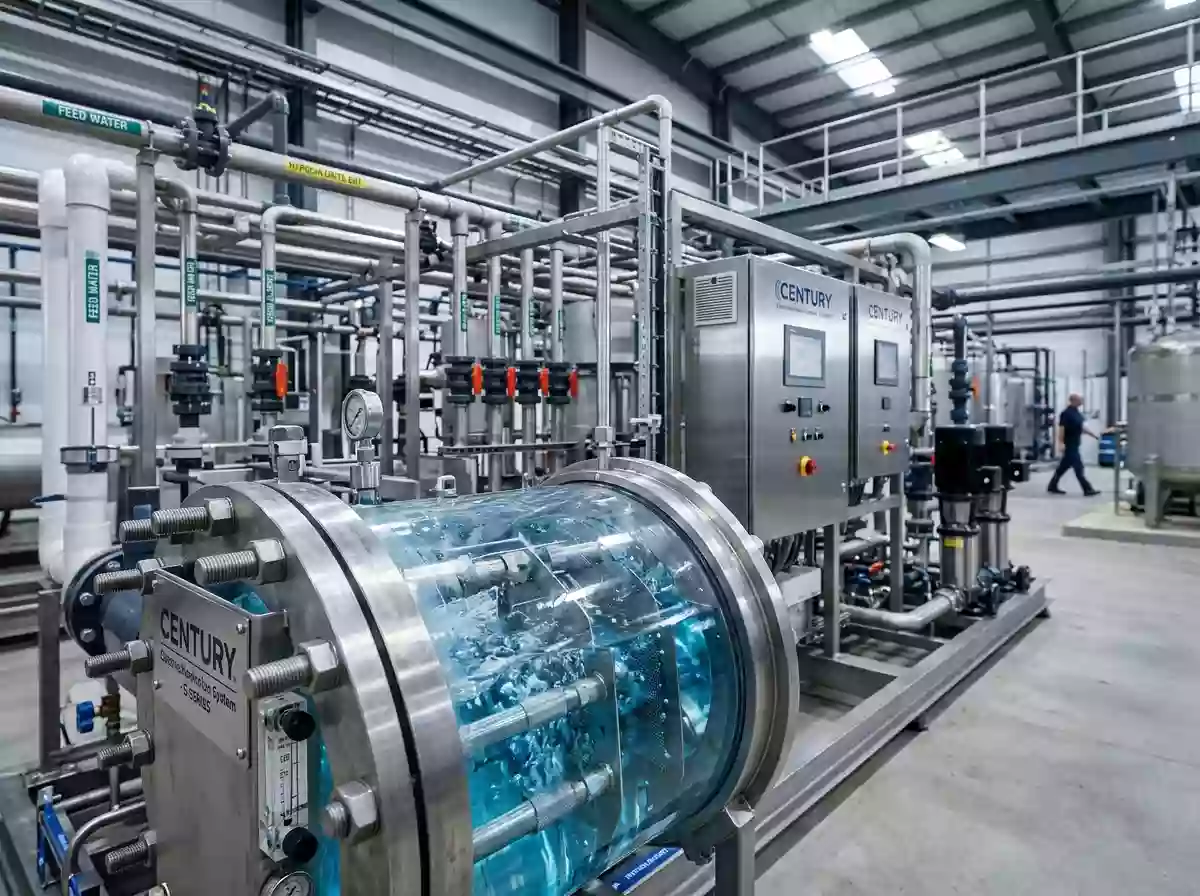
Century commercial electrochlorination platforms eliminate operational vulnerabilities by embedding a self-developed, intelligent thermal rectification control matrix. Equipped with high-precision NTC temperature-sensing manifolds and high-frequency smart power supplies, Century systems utilize centralized PLC microprocessors to manage a continuous, closed-loop thermal protection protocol, maximizing overall electrochlorination cell efficiency. The automation array continuously tracks live temperature metrics at both the main water inlet and inside the core electrolytic chamber. Under freezing winter conditions, the PLC instantly executes a voltage-clamping routine that safely steps down the output amperage while distributing an automated alert to operators to adjust the saline gradient, completely eradicating the risk of high-voltage spikes piercing the catalyst layer.
As operations shift into high-temperature summer conditions, the automated controller dynamically scales up the frequency of its self-cleaning reverse polarity cycles, mechanically shattering and flushing away emerging calcium carbonate (CaCO3) crystalline structures before they can fuse to the MMO coating. This advanced temperature-compensated strategy seamlessly adapts to diverse geographical and climate extremes without requiring manual technical tuning. By keeping the equipment locked into an optimized electrolytic operational window, Century successfully guarantees stable chlorine output while comprehensively safeguarding the core titanium electrodes, dramatically driving down annual system maintenance overheads and capital replacement costs.