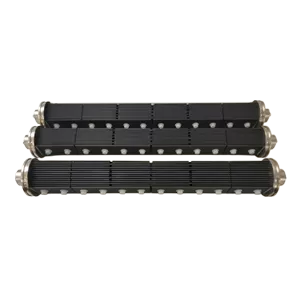
OEM Pool Cell Electrode Stacks & Internal Cores
For brands manufacturing residential and commercial pool chlorination systems, the external plastic housing dictates the aesthetic, but the internal titanium stack is the undeniable engine of the product. Century partners with global pool equipment OEMs and injection-molding facilities to supply pre-assembled, meticulously toleranced OEM pool cell internal assemblies.
We bridge the gap between electrochemistry and plastic manufacturing. By delivering a fully constructed swimming pool salt cell core directly to your assembly line, we eliminate the need for your factory to source raw titanium plates, machine spacers, or manage the highly sensitive torquing of titanium hardware. You mold the clear cell housings; we provide the drop-in internal engine ready for final epoxy potting and sealing.
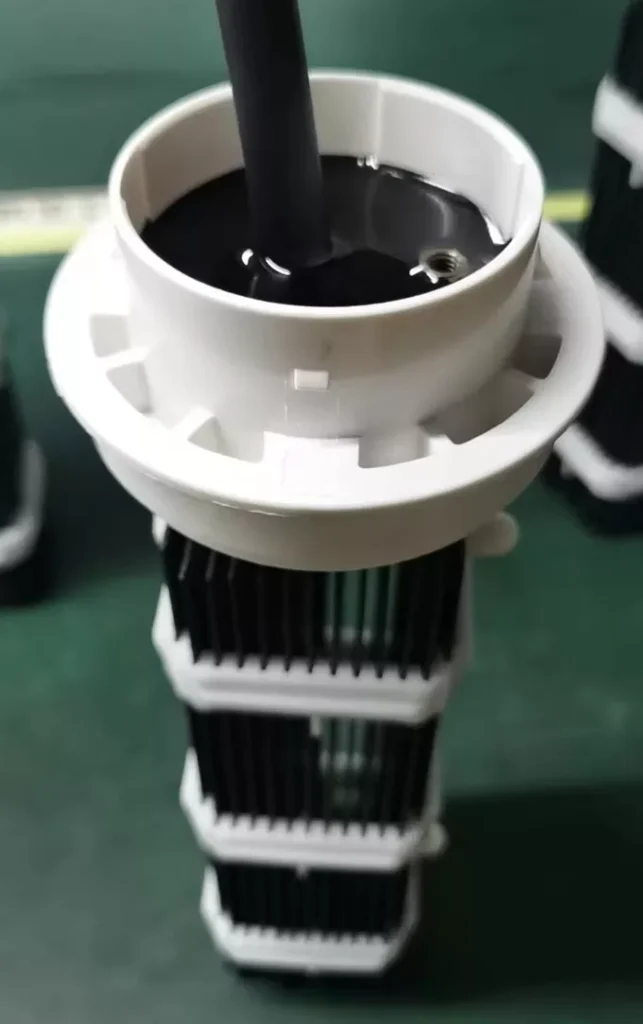
The Assembly Disconnect: Why OEMs Outsource Internal Cores
Many pool equipment brands attempt to purchase individual coated plates and assemble the internal stacks on their own production lines. This frequently results in high warranty claim rates due to mechanical assembly errors rather than coating failures.
The architecture of a pool chlorinator electrode stack is unforgiving. If the Grade 2 titanium threaded rods are over-torqued by standard assembly-line pneumatic tools, the soft titanium threads will gall and strip. If the gap tolerance between the bipolar plates shifts by even a fraction of a millimeter due to improperly seated PVDF spacers, the electrical resistance of the brine changes, causing the power supply to overheat. Furthermore, poorly machined terminal posts create micro-voids in the potting epoxy, leading to catastrophic water ingress and short circuits in the field.
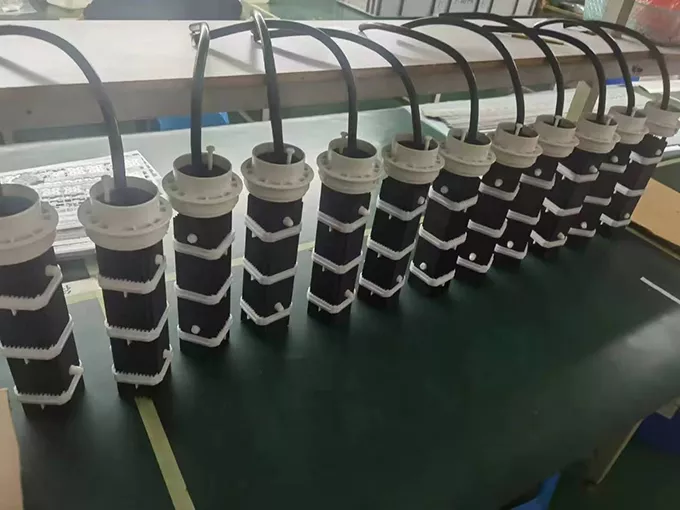
Drop-In Ready Titanium Cores
Century eliminates these manufacturing bottlenecks. We act as your specialized Tier-1 contract manufacturer for the internal wet-end components. Our engineering team takes your proprietary 3D CAD models of your plastic cell housing and engineers a titanium cell core for OEMs that fits flawlessly within your specific internal dimensions.
Our standard internal assemblies are shipped to your facility complete with:
- Precision-Spaced Ru-Ir Plates: Pre-configured in your required monopolar or bipolar (reverse polarity) arrangement, featuring our proprietary bi-directional coating.
- Machined Terminal Posts: Leak-proof titanium terminal posts designed with specific mechanical retention grooves. These grooves ensure a permanent, watertight bond when your factory pours the potting epoxy into the terminal cap.
- Sensor Integration Hooks: Pre-installed titanium or PVDF brackets aligned perfectly to hold your proprietary thermistors (temperature sensors) and flow switches.
Technical Specifications: OEM Pool Cell Stacks
(The following parameters represent our baseline capabilities for pool cell cores. Every assembly is custom-engineered to match the specific chlorine output (e.g., 15g/h, 25g/h, 40g/h) and housing footprint of your brand.)
| Assembly Parameter | OEM Pool Cell Internal Cores |
|---|---|
| Cell Architecture | Bipolar (Reverse Polarity) or Monopolar Arrays |
| Plate Material | ASTM B265 Grade 1 Pure Titanium |
| Coating Formulation | Bi-Directional Ruthenium-Iridium (Ru-Ir) |
| Noble Metal Loading | 8 g/m² to 15 g/m² (Optimized for 3 to 5-year lifespans) |
| Internal Gap Tolerance | Precision 1.5 mm to 2.0 mm (Prevents scale bridging) |
| Hardware & Fasteners | Grade 2 Titanium Rods, Nuts, and Washers |
| Spacers / Insulators | High-Temperature, Chemical-Resistant PVDF |
| Terminal Design | Threaded Posts, Machined Lugs, or Custom Wire Leads |
| Output Scaling | Engineered for 15g/h up to 50g/h residential/commercial units |
Zero-Leakage Terminals and Resistance Testing
The most common failure point in any pool salt cell is where the titanium terminal exits the plastic housing. If the potting compound does not adhere perfectly to the titanium, highly corrosive chlorinated water will travel up the terminal and destroy the external wiring harness.
Century utilizes proprietary CNC machining to create specific knurling and O-ring retention glands on our terminal posts. This ensures absolute mechanical lock with your sealing epoxy. Before any batch of cores leaves our clean-room assembly facility, they undergo 100% electrical continuity and resistance testing. We verify that the internal resistance across the stack perfectly matches the algorithms of your specific power center, ensuring true “plug-and-play” integration on your factory floor.
Frequently Asked Questions (FAQs)
Absolutely. Injection-molded plastics shrink after cooling, which can affect internal clearances. We work directly with your mechanical engineers and injection molding partners to define the exact dimensional tolerances required so the titanium core drops in smoothly without rattling or forcing.
While this specific division focuses entirely on the internal titanium cores, Century does possess complete injection molding capabilities. We can manufacture the external clear housings, threaded unions, and tailpieces as part of our comprehensive OEM services. Please visit our Molded & Machined Cell Housings section for more details.
For completely custom geometries requiring new alignment jigs and specialized terminal machining, our typical MOQ for the initial production run is 20 units, following the successful sign-off of the physical prototypes by your engineering team.