Industrial Water Treatment Equipment & Electrolytic Infrastructure
For municipal water authorities, heavy industrial plants, and commercial cooling tower operators, securing a reliable and safe disinfection supply chain is a critical operational mandate. Historically, large-scale water treatment relied heavily on the transportation, storage, and handling of highly volatile pressurized chlorine gas or bulk commercial liquid bleach. Today, stringent HAZMAT (Hazardous Materials) regulations, strict OSHA oversight, and supply chain vulnerabilities have transformed bulk chlorine logistics into a major liability.
Century provides a highly engineered, intrinsically safe alternative. We are a primary manufacturer of heavy-duty industrial water treatment equipment, specializing in advanced electrolytic disinfection infrastructure. By providing the core technology to convert common salt (or raw seawater), water, and electricity into powerful chlorine-based disinfectants directly at your facility, we empower global engineering firms, EPC (Engineering, Procurement, and Construction) contractors, and skid builders to deploy robust, continuous-duty disinfection solutions that handle massive hydraulic loads without the regulatory burden of hazardous chemical storage.
The Paradigm Shift in Municipal and Industrial Disinfection
The transition toward site-based industrial electrolytic disinfection is fundamentally driven by safety, regulatory compliance, and operational economics. When a water treatment plant relies on delivered 12.5% commercial sodium hypochlorite, that chemical begins to degrade immediately upon manufacturing. During transit and storage, it loses its active biocidal strength while simultaneously producing harmful byproducts such as chlorate and perchlorate, which strictly limits its shelf life and effectiveness.
Furthermore, facilities storing bulk chlorine gas are subject to severe Risk Management Plan (RMP) compliance. Century’s heavy-duty municipal water treatment infrastructure completely bypasses these bottlenecks. Our electrolytic architectures allow facilities to generate stable, low-concentration (typically 0.8% to 1.0%) disinfectant solutions strictly on demand. Because this concentration falls well below the threshold for hazardous materials classification, it removes your facility from strict RMP oversight, drastically reduces insurance premiums, and ensures that your disinfection process remains self-reliant, mathematically precise, and isolated from global chemical supply chain shocks.
Complete Electrolytic Infrastructure for Skid Builders
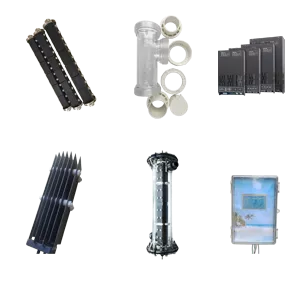
We do not merely manufacture singular parts; we engineer complete water treatment skid components and turnkey architectures. To support diverse industrial requirements, our manufacturing divisions are structured to provide EPCs with exactly the level of integration they require. Navigate our three core industrial divisions below:
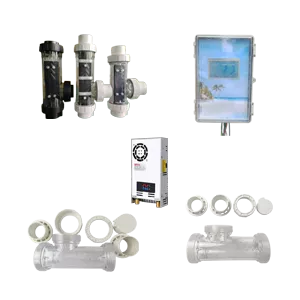
Industrial Electrolyser Vessels & Housings | PVC & Acrylic Chambers
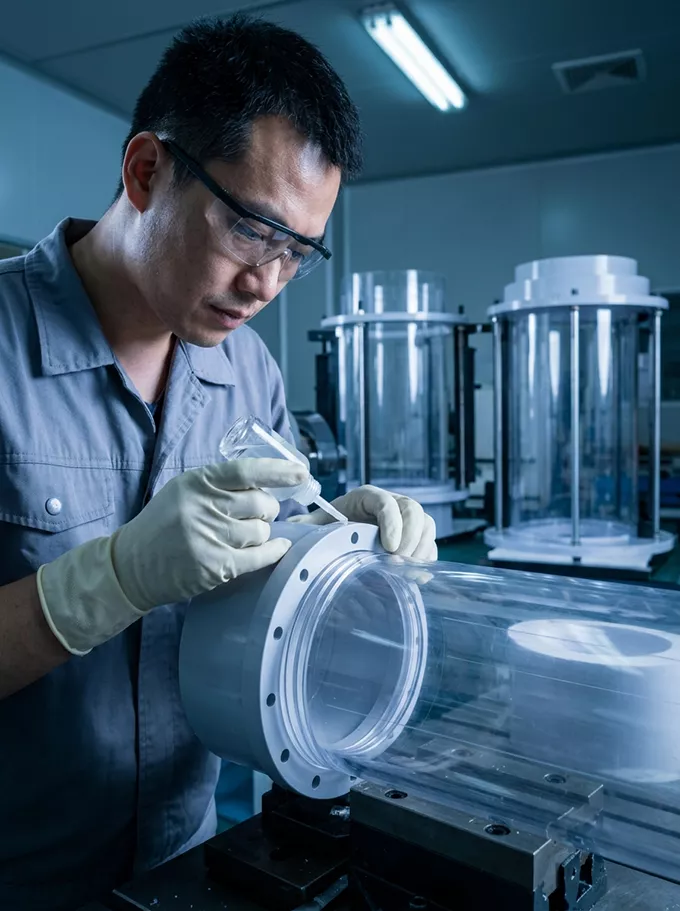
High flow rates and significant fluid pressures require containment vessels that far exceed the physical limitations of standard injection-molded plastics. Catering directly to skid builders who assemble their own internal electrode cores, this division manufactures heavy-walled electrolyser housings. We CNC machine and fabricate these high-pressure vessels from premium UPVC, CPVC, and clear Acrylic blocks, ensuring absolute leak-proof operation under extreme hydrodynamic stress.Industrial Electrolysis Rectifiers | High Current DC Power Supplies
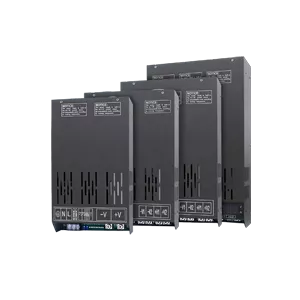
The operational stability of any electrolytic cell is entirely dictated by the reliability of its DC power supply. Standard commercial power boxes cannot withstand the violent electrical back-pressure and thermal demands of massive industrial arrays. In this division, we engineer heavy-duty constant-current rectifiers equipped with massive aluminum heat sinks, advanced phase-control or switch-mode topologies, and integrated Modbus/Profibus PLC communication modules, built to deliver thousands of amps 24/7 without thermal throttling.On-Site Sodium Hypochlorite Generators | Electrochlorination Systems Manufacturer
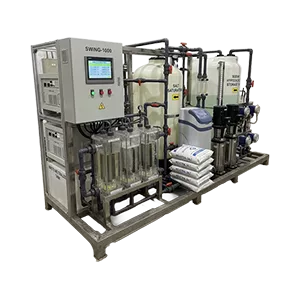
This is our primary complete-system division. Designed for facilities seeking ready-to-deploy generation technology, this category encompasses our entire lineup of site-based production units. Explore this section to view our specialized sub-categories, including systems engineered for high-concentration outputs, direct marine and coastal water processing, standard municipal brine setups, and highly compact modular frames designed for rapid EPC integration.
Vertical Integration and EPC Partnership
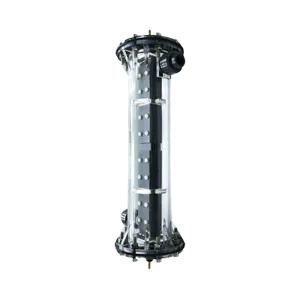
Unlike mass-produced injection molded parts, industrial chlorination demands scale and specific geometry. Our Machined Electrolyser Vessel production relies on raw extruded pipe and solid plastic billet, transforming them into precision engineering components.
- Precision CNC Machining: We start with thick-walled UPVC blocks and extruded Acrylic tubes. Our multi-axis CNC routers bore ports, face flanges, and thread connections with exact dimensional tolerances, ensuring a perfect fit for internal electrode supports.
- Industrial Solvent Welding (Gluing): The assembly of a tubular electrolyzer vessel requires highly skilled technicians. The machined UPVC end-caps and port manifolds are chemically fused (glued) to the main body. This manual, meticulous process ensures a leak-proof monolithic structure capable of handling harsh, highly concentrated caustic and chlorine gas environments.


Material Selection: Acrylic and UPVC
Visibility and chemical resistance are the two non-negotiable requirements for a chlor-alkali electrolyzer housing.
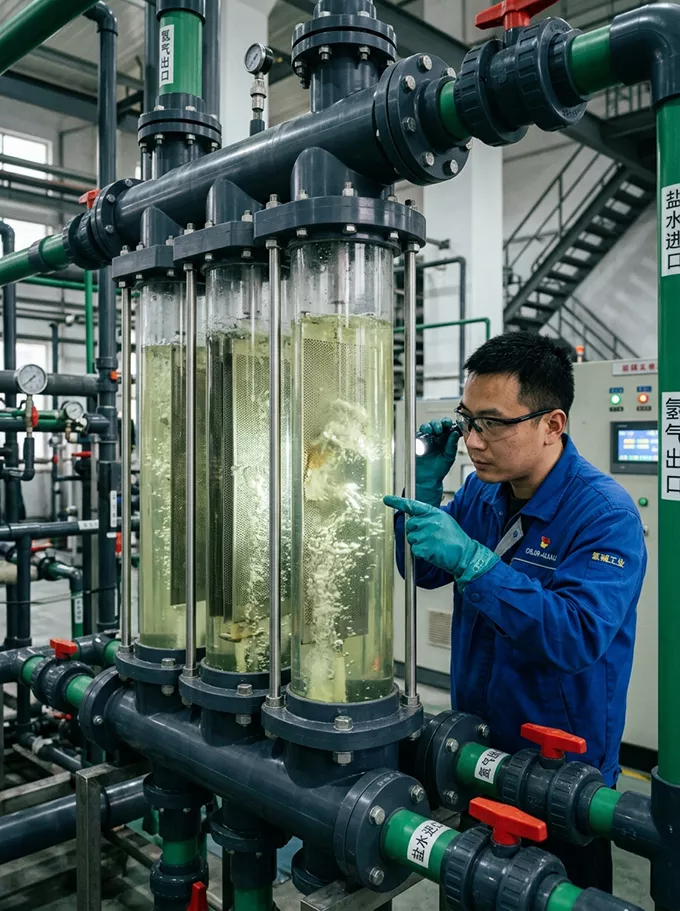
- Clear Acrylic (PMMA) Main Tubes: For the main reaction chamber, we utilize heavy-wall transparent acrylic. This provides engineers and plant operators with crucial visual access to monitor brine flow, hydrogen gas dispersion, and inspect for scale buildup on the titanium plates without shutting down the system.
- Machined UPVC Manifolds: For the end-caps, structural supports, and plumbing interfaces, we use industrial-grade UPVC. Known for its exceptional resistance to concentrated sodium hypochlorite and sodium hydroxide, UPVC ensures the structural integrity of the vessel’s connection points.
Operating Parameters & Engineering Traits
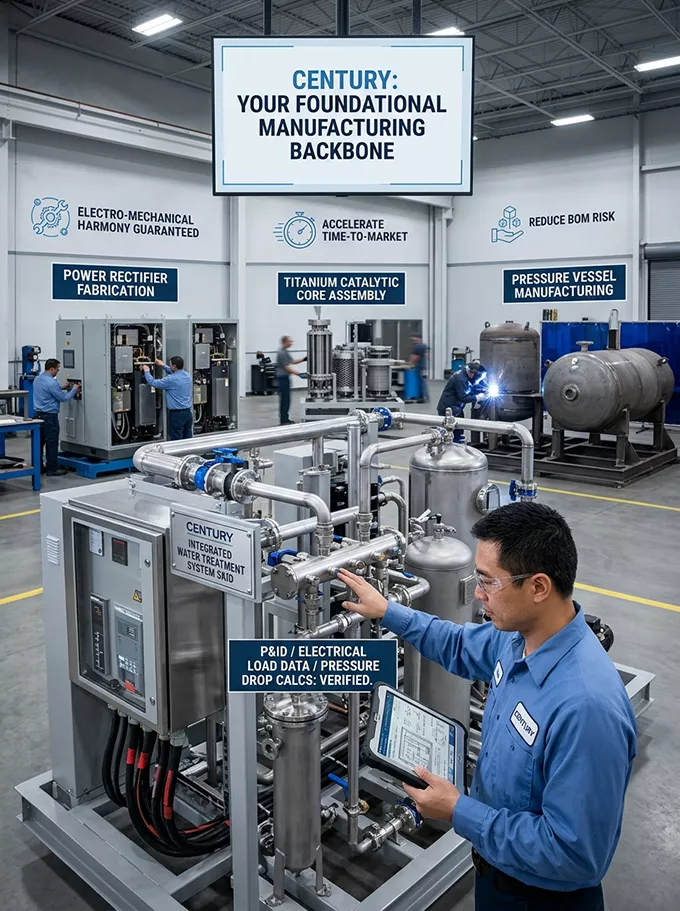
Century does not compete against system integrators; we serve as your foundational manufacturing backbone. If you are an EPC contractor tasked with designing a proprietary water treatment skid, sourcing mismatched components from various vendors often leads to catastrophic integration failures. A power supply from one vendor may not match the electrical resistance curve of the titanium cell from another, leading to rapid coating depletion or thermal runaway.
Because Century manufactures the power rectifiers, the pressure vessels, and the internal titanium catalytic cores under one roof, we guarantee perfect electro-mechanical harmony. We provide our EPC partners with comprehensive P&ID (Piping and Instrumentation Diagram) support, accurate pressure drop calculations, and verified electrical load data. Partnering with Century accelerates your time-to-market and drastically reduces your Bill of Materials (BOM) risk.

Century acts primarily as the heavy equipment manufacturer and Tier-1 supplier. We deliver the foundational equipment to your local EPC contractors or mechanical integrators. However, we provide extensive remote engineering support, detailed wiring schematics, and operational manuals to ensure your local installation teams can commission the infrastructure flawlessly.
Yes. All of our industrial rectifiers and system control panels can be equipped with advanced PLC integration modules. We support industry-standard protocols such as Modbus RTU, TCP/IP, and Profinet, allowing your central control room to remotely command current setpoints and monitor real-time fault alarms without manual intervention.
Absolutely. Our business model is designed to support skid builders. You can procure standalone rectifiers, empty CNC-machined vessels, or bare titanium electrode arrays based entirely on your specific engineering needs.