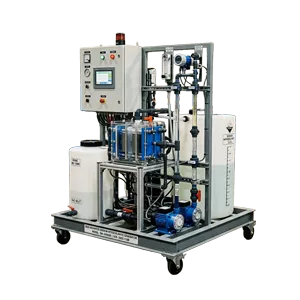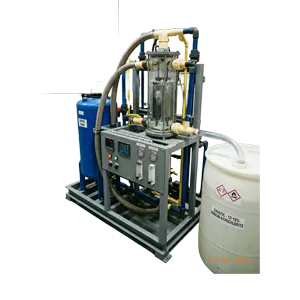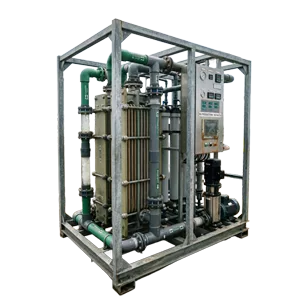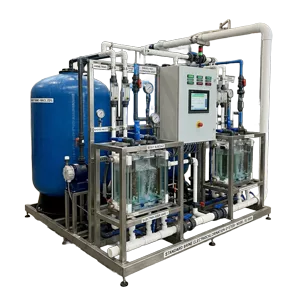
Machined Sodium Hypochlorite Housings (100g/h to 3000g/h)
For municipal water treatment plants, industrial cooling towers, and large-scale disinfection skids, off-the-shelf plastic molds simply cannot handle the custom dimensions and aggressive chemical nature of on-site generation. Century specializes in the fabrication of custom machined sodium hypochlorite housings, designed specifically to accommodate massive multi-plate titanium anode stacks.
We engineer and manufacture vessels capable of supporting chlorine outputs ranging from a modest 100g/h up to a massive 3000g/h (3 kg/h). By utilizing heavy-wall extruded plastics and precision CNC machining, we provide original equipment manufacturers (OEMs) and skid builders with a highly reliable, leak-proof enclosure for their mission-critical brine electrolysis systems.
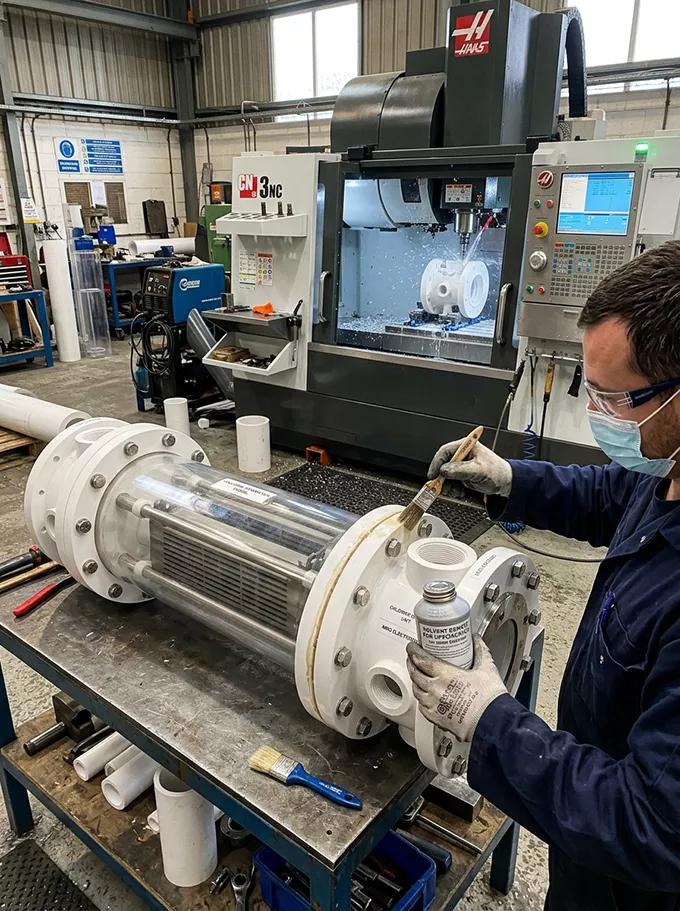
Fabrication Methodology: Machining and Solvent Welding
Building an enclosure for industrial-scale chlorine generation requires structural integrity that cannot be achieved through basic injection molding. Our manufacturing process for a glued pvc electrolyzer vessel relies on heavy-duty raw materials and skilled manual assembly.
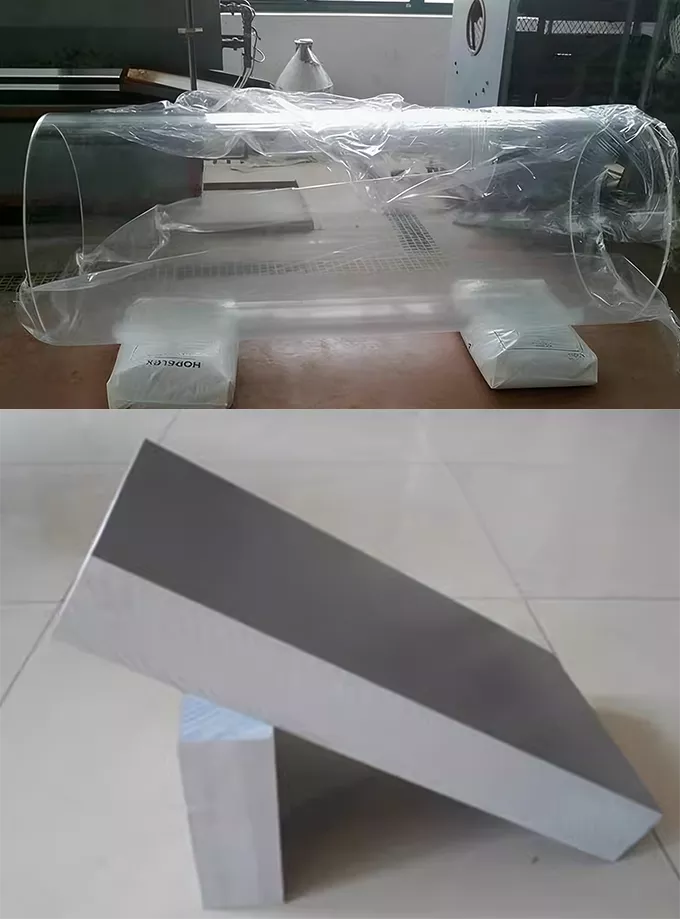
- Precision CNC Machining: The process begins with solid UPVC billets and thick-walled extruded acrylic tubes. Our multi-axis CNC routers bore custom flow ports, face connection flanges, and thread internal supports with strict dimensional tolerances. This ensures your custom MMO (Mixed Metal Oxide) titanium arrays slide in perfectly without vibration.
- Industrial Solvent Welding: The structural assembly relies on permanent chemical bonding. Our technicians manually solvent-weld (glue) the machined UPVC end-caps and manifolds to the main reaction tube. This meticulous fusion process creates a monolithic structure that is highly resistant to the corrosive attacks of concentrated sodium hypochlorite and sodium hydroxide.
Material Engineering: Acrylic and UPVC Integration
Visual inspection and chemical resilience dictate our material choices. A standard PVC Electrolytic Cell provides excellent resistance to caustic environments, but it lacks visibility. To solve this, we combine materials:
- Clear Acrylic (PMMA) Reaction Tubes: We utilize thick extruded acrylic for the main body to create an Acrylic Electrolysis Cell. This transparent chamber allows plant operators to visually monitor the brine flow rates, observe hydrogen gas dispersion, and inspect the titanium plates for calcium scale buildup without shutting down the system or dismantling the plumbing.
- Machined UPVC Manifolds: The structural end-caps, inlet/outlet ports, and flange connections are machined from industrial UPVC. This ensures maximum tensile strength at the connection points where the vessel interfaces with the facility’s hard piping.
Technical Specifications: Machined Hypochlorite Series
(Review our standard fabrication parameters below. Note that all dimensions and interfaces can be customized to your CAD specifications).
| Technical Specification | Machined Hypochlorite Chamber Data |
|---|---|
| Housing Architecture | Tubular Reaction Chamber with Machined End-Caps |
| Electrode Accommodation | Designed for massive multi-plate or mesh MMO titanium stacks |
| Visual Inspection | 360-degree clear view via extruded PMMA body |
| Chemical Resistance | High tolerance to concentrated NaCl, NaOCl, and NaOH |
| Pressure Limits | Strictly Low-Pressure systems (≤ 0.2 MPa) |
| Assembly Method | Chemical solvent fusion (Leak-tested prior to shipment) |
Fluid Dynamics and Custom Interfacing
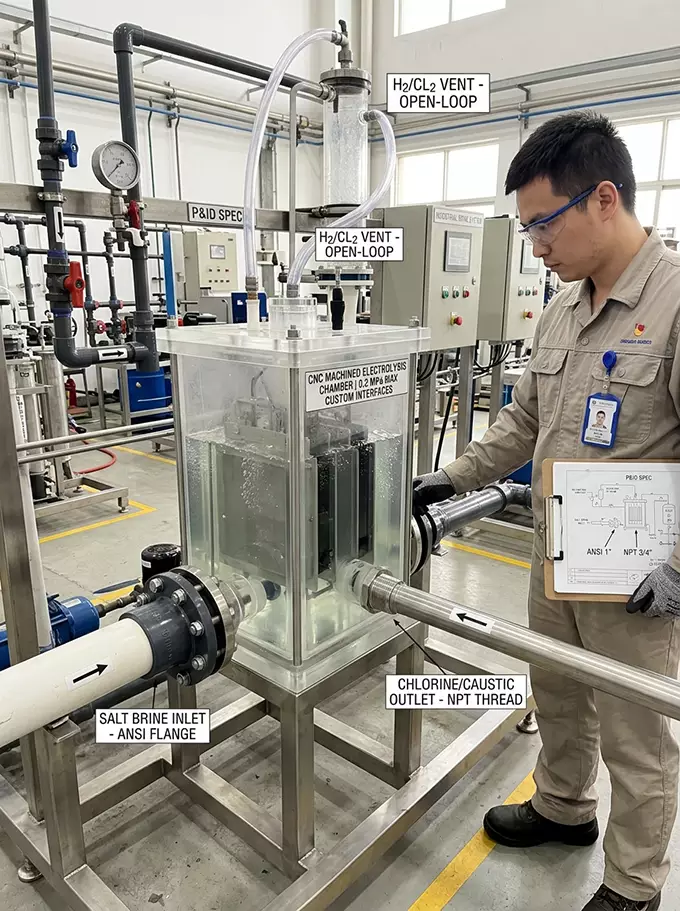
Industrial brine electrolysis chambers typically operate under very different hydraulic conditions compared to commercial filtration loops. These are not high-pressure forced-flow systems. Instead, they operate in gravity-fed or low-pressure open-loop configurations.
Our machined vessels are specifically pressure-rated for a maximum of 0.2 MPa (approximately 29 PSI). Within this operating window, we can customize the fluid inlet, outlet, and gas venting ports to match your exact skid layout. Whether your P&ID (Piping and Instrumentation Diagram) requires ANSI standard bolted flanges for a municipal plant or specific NPT threaded connections for an industrial cooling tower, our CNC capabilities ensure a drop-in fit for your assembly team.
Understanding the Investment in Custom Machining
Procurement teams often note that a custom sodium hypochlorite cell body carries a significantly higher unit cost than standardized molded shells. This price difference directly reflects the manufacturing reality: these are low-volume, highly bespoke units.
The cost is driven by the premium price of thick-walled acrylic extrusions, the extensive machine time required to mill solid UPVC blocks, and the highly skilled labor necessary for flawless solvent welding. However, when housing a multi-thousand-dollar titanium electrode stack in a hazardous environment, an off-the-shelf compromise is a liability. Investing in a Century custom-machined vessel guarantees absolute chemical containment, perfect stack fitment, and decades of operational reliability.
Frequently Asked Questions (FAQs)
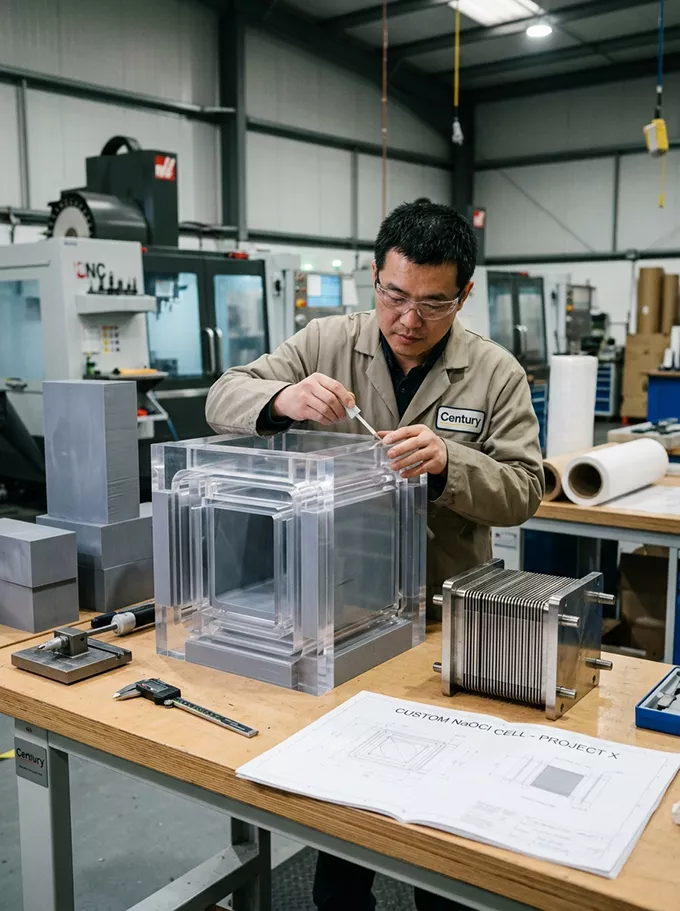
Yes. We specialize in contract manufacturing. Submit your STEP or DWG files, and our engineering team will review the tolerances for CNC machining and solvent welding feasibility.
Due to the nature of solvent-welded acrylic and UPVC construction, as well as the large surface area of high-capacity tubular vessels, they are engineered strictly for low-pressure brine processing. Exceeding 0.2 MPa risks compromising the glued seams.
As a fully integrated factory, we can supply just the empty machined vessel, or we can provide a complete, ready-to-install electrolyzer populated with our custom ruthenium-iridium coated titanium stacks.
Contact Our Engineering Team Today
Ready to upgrade your plant’s disinfection capabilities with a reliable, plug-and-play modular system? Please contact us immediately to discuss your footprint specifications and receive a customized B2B quote.