
Titanium Electrode Assemblies & Stacks for OEMs
Procuring premium coated titanium plates is only the first step in manufacturing a reliable disinfection system. The actual performance of a salt chlorine generator or an industrial hypochlorite skid relies entirely on how those plates are mechanically engineered, spaced, and fastened together. Century operates as a Tier-1 contract manufacturer, providing pre-engineered, ready-to-install titanium electrode assemblies and complete electrochlorination cell cores for global water treatment brands.
Designed strictly for the rigors of brine electrolysis and sodium hypochlorite generation, our electrode stacks eliminate the massive labor costs and precision-machining bottlenecks associated with in-house cell assembly. Whether your factory needs thousands of compact cores to drop into custom plastic housings for the residential pool market, or massive multi-kilogram industrial arrays for municipal water plants, we deliver perfectly toleranced, zero-leakage assemblies.
Explore Our OEM Electrode Stack Portfolios
We manufacture internal cell cores for the entire spectrum of sodium hypochlorite generation. Click on the categories below to view specific mechanical blueprints, current density ratings, and terminal configurations for our primary assembly platforms.

OEM Pool Cell Electrode Stacks | Custom Titanium Cell Cores
High-volume, compact Ru-Ir coated stacks engineered specifically for the consumer and commercial pool markets. Shipped as fully assembled cores with integrated titanium terminal posts and temperature sensor brackets, ready to be potted and sealed directly into your factory's custom injection-molded clear housings.Industrial Electrochlorination Cell Cores | Parallel Plate Stacks
Heavy-duty, parallel-plate arrays built for on-site municipal and heavy industrial chlorination skids. These massive assemblies are configured for high-amperage (200A+) continuous loads, featuring ultra-thick titanium busbars to prevent thermal degradation during 24/7 continuous chlorine evolution.
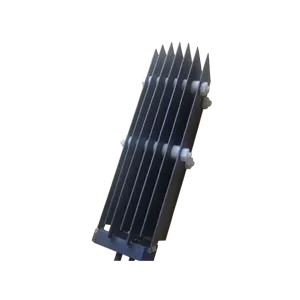
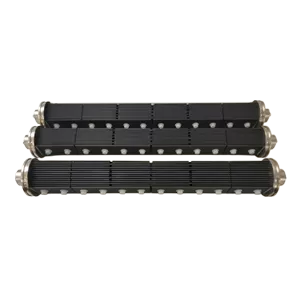
Mechanical Specifications: Titanium Electrode Assemblies
To assist your mechanical and electrochemical engineering teams in integrating our cores into your system housings, the table below outlines our standard assembly parameters. (Note: As a direct manufacturer, Century provides full customization for overall dimensions, plate count, and lug geometries).
| Assembly Specification | Pool & Commercial Salt Cell Cores | Industrial Hypochlorite Stacks |
|---|---|---|
| Typical Electrical Configuration | Monopolar or Bipolar (Reverse Polarity) | Bipolar Parallel Plate Arrays |
| Base Material (Hardware) | Grade 1 / Grade 2 Pure Titanium | Grade 2 Pure Titanium |
| Catalytic Coating | Ruthenium-Iridium (Ru-Ir) | Ruthenium-Iridium (Ru-Ir) |
| Standard Gap Tolerance | 1.5 mm to 2.0 mm (Precision spaced) | 2.0 mm to 3.0 mm (High flow design) |
| Insulating Spacers / Washers | High-Temp PVDF or PTFE | Heavy-Duty PTFE or Custom UPVC |
| Terminal Connections | Threaded Ti Posts or Machined Lugs | Heavy Ti Busbars or Flanged Terminals |
| Current Density Capacity | Optimized for 800 - 1000 A/m² | Engineered for 1000 - 1500 A/m² |
The Engineering Challenge: Gap Tolerance and Material Integrity
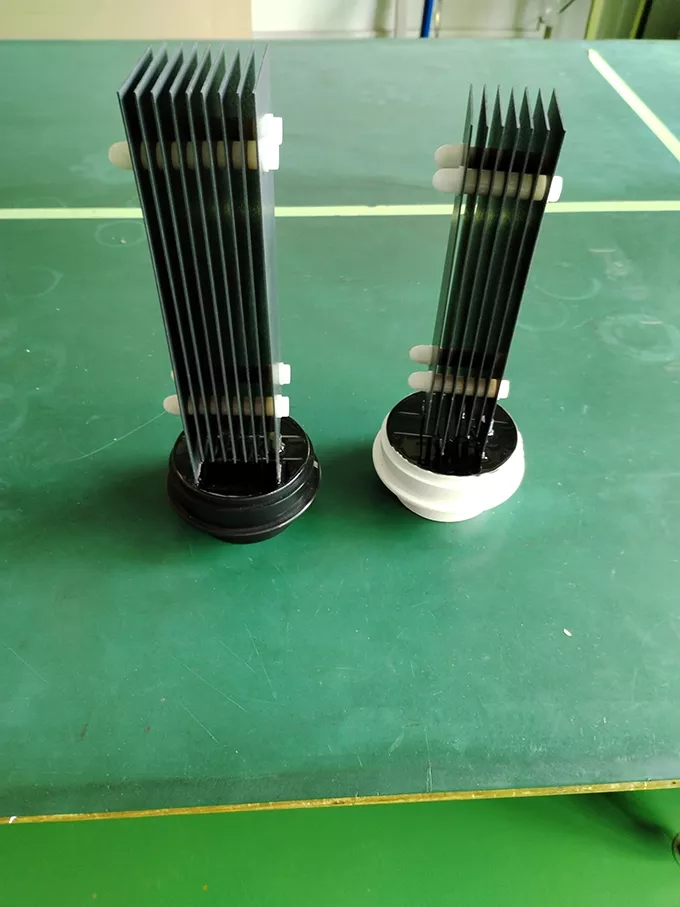
In electrochlorination, the physical distance between the anode and cathode—known as the gap tolerance—is highly critical. A gap that is too wide drastically increases the electrical resistance of the brine, causing your power supply to overheat and waste energy. A gap that is too narrow restricts fluid velocity, leading to rapid calcium scale bridging and eventual short circuits.
Building a reliable bipolar electrode stack requires more than just bolting metal together. Standard stainless steel hardware will dissolve in minutes inside a chlorination cell. Century utilizes only ASTM Grade 1 and Grade 2 pure titanium threaded rods, nuts, and precision-machined terminal lugs. To maintain an absolute rigid gap tolerance (typically 1.5mm to 2.5mm depending on your P&ID requirements) under high flow pressure, we integrate custom-machined high-temperature PVDF or PTFE spacers. These fluoropolymer insulators are highly resistant to the violent acidic and alkaline shifts that occur during reverse-polarity self-cleaning cycles.
The Century Assembly Advantage
Many skid builders attempt to purchase raw MMO plates and assemble the stacks in-house to save money. This almost always results in high defect rates. Improper torque on titanium nuts can strip the soft threads, while slight misalignments in the PVDF spacers can cause catastrophic hot-spots on the catalytic coating.
By outsourcing your OEM salt cell internal assembly to Century, you transfer the manufacturing risk to us. We utilize precision alignment jigs and calibrated torque drivers in a clean-room environment. Furthermore, because we manufacture both the raw plates and the final assembly, we perform complete continuity and resistance testing across the entire stack before it ships. You receive a plug-and-play internal engine that drastically accelerates your production line.
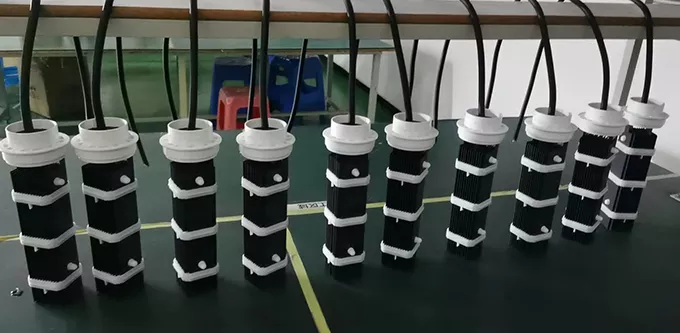
Absolutely. We act as a dedicated OEM partner. Provide us with your CAD files or physical 3D-printed prototypes of your housing, and our mechanical engineers will design a custom titanium plate geometry and terminal configuration that drops perfectly into your enclosure with the correct sealing margins.
We supply the mechanical titanium and PVDF stack (the core). While we can source and pre-install custom EPDM or Viton O-rings on the terminal posts upon request, the final potting (epoxy pouring) is typically handled by the OEM once the core is inserted into the outer housing.
For heavy industrial stacks subjected to high amperage and varying brine temperatures, we engineer the internal titanium tie-rods with specialized expansion tolerances and utilize PTFE spacers that absorb minor dimensional shifts without compromising the critical plate gap.
Related Products
Contact our engineering team today to discuss your industrial water treatment needs and receive a detailed quote.