
The Ultimate Guide to Salt Cell Electrodes: Why MMO Titanium Anodes Outperform Traditional Options
In the demanding world of pool water treatment and municipal water disinfection, the efficiency of your salt chlorinator hinges on a single, critical component: the electrode. While traditional materials like graphite were once the industry standard, Dimensionally Stable Anodes (DSA) have revolutionized the market.
At Century, we specialize in high-performance MMO titanium anodes that address the fatal flaws of older technologies—high resistance, rapid erosion, and unstable chlorine output. If you are looking for a salt chlorinator cell replacement or designing a new system, understanding these electrochemical nuances is key to your ROI.
Anatomy of a Salt Cell: Understanding the Role of Anodes and Cathodes
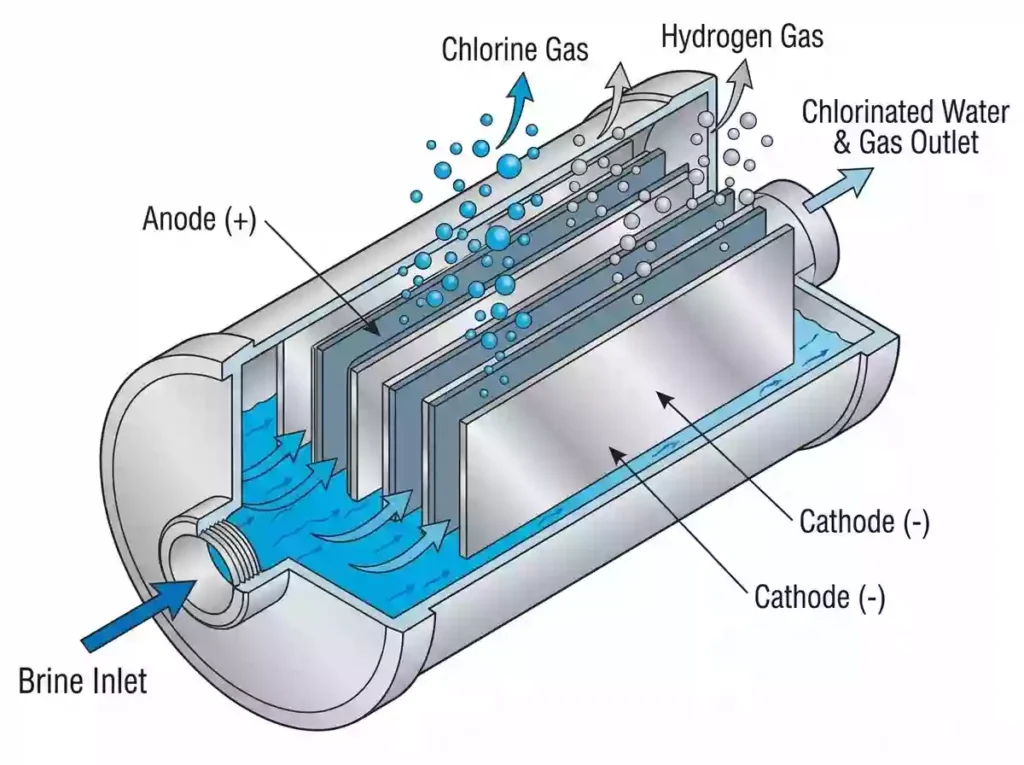
A salt chlorination cell is essentially a specialized electrochemical reactor. Its primary function is to perform the electrolysis of salt water to produce sodium hypochlorite ($NaOCl$), a process widely used for both luxury swimming pool sanitization and large-scale industrial water treatment.
The Electrochemical Reaction Process
While this blog focuses on the physical durability of our electrodes, understanding the chemical transition is vital. The process occurs in three distinct stages:
- At the Anode (Positive): Chloride ions are oxidized to produce chlorine gas (Cl2).
- At the Cathode (Negative): Water is reduced to produce hydrogen gas (H2) and hydroxide ions (OH–).
- The Result: The chlorine gas reacts with the hydroxide ions to form the sanitizing agent, sodium hypochlorite.
For a comprehensive breakdown of the chemical equations and energy requirements, please refer to our detailed technical guide: Water Electrolysis Process.
Why Century Focuses on Physical Integrity
The efficiency of the sodium hypochlorite generation (OSHG) depends entirely on the surface area and catalytic activity of the plates. Unlike standard electrodes, Century’s MMO Titanium Anodes are engineered to minimize “overpotential”—the extra energy required to force the reaction. By optimizing the physical structure of the titanium substrate, we ensure that the maximum amount of chlorine is produced with the minimum amount of electricity.
Additionally, our cathodes are designed to handle the inevitable byproduct of hydrogen gas without compromising the structural integrity of the cell stack, a common failure point in lower-quality B2B water treatment systems.
What are Dimensionally Stable Anodes (DSA)?
A Dimensionally Stable Anode (DSA), also known as a metal anode, is a Ceramic-Electro-catalytic-Semi-Conductor (CESC) coated electrode. It uses a titanium substrate—a “valve metal” that remains conductive when used as a cathode in brine but forms a non-conductive oxide layer when used as an anode.
By applying a specialized coating of precious metal oxides (typically Iridium Ir and Ruthenium Ru) onto the titanium surface, we transform it into a highly corrosion-resistant, high-conductivity MMO titanium anode. This technology ensures that the electrode’s physical dimensions remain constant throughout its service life, maintaining a stable gap between plates—a critical factor for consistent electrolysis.
Titanium Anode vs. Graphite: A Technical and Economic Comparison
For large-scale industrial water treatment and high-end pool systems, the transition from graphite to DSA is no longer optional—it’s a financial necessity.
| Feature | MMO Titanium Anodes (DSA) | Traditional Graphite Anodes |
| Service Life | 5–8 Years (Ru-Ir Coating) | 3–6 Months to 2 Years |
| Cell Voltage | Low (3.0–3.5 V); 20-30% Energy Savings | High (0.5–1 V higher); High power loss |
| Chlorine Efficiency | 90–95%+ (Minimal oxygen side-reactions) | 70–85% (Low efficiency, high waste) |
| Dimensional Stability | Excellent: No dissolution, stable gap | Poor: Carbon dissolves, increasing gap & voltage |
| Product Purity | High: Crystal clear sodium hypochlorite | Low: Carbon dust contaminates the water |
| Operating Cost | Low: Rare replacements, minimal maintenance | High: Frequent downtime and electrode costs |
| Current Density | High: 800–1500 A/m2 | Low: Typically <1000 A/m2 |
Maximizing Efficiency: Current Density and Electrode Design
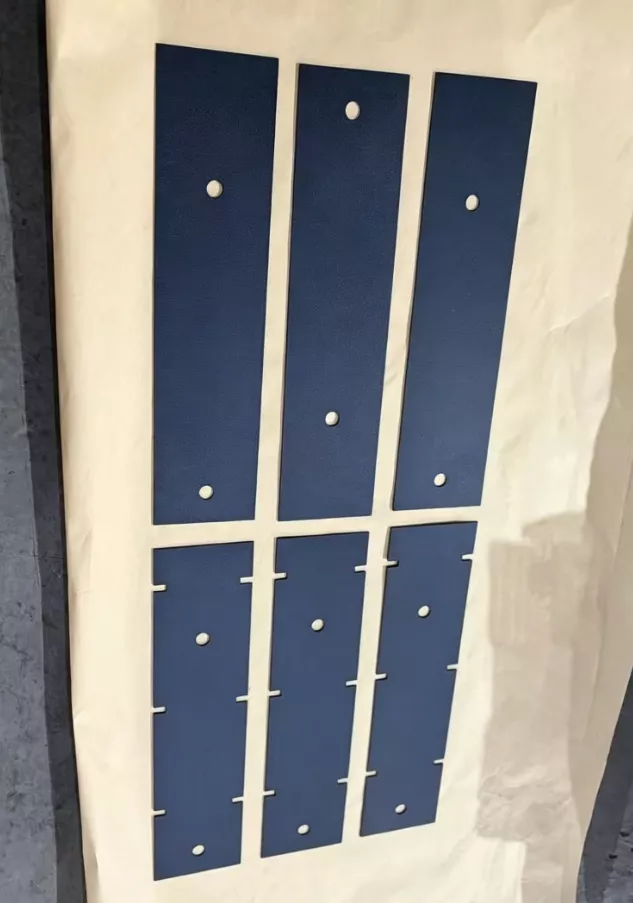
Century’s electrodes for pool and municipal water plants are primarily designed in plate form. This design allows us to customize the number and size of plates based on the required chlorine output.
Our proprietary coating formula reduces “overpotential” and enhances intrinsic activity, allowing for higher current density without sacrificing the electrode’s integrity. The plate design is not just about ease of manufacturing; it is about ensuring a stable gap that guarantees consistent quality and lowers the overall titanium electrode for water treatment manufacturing costs.
Why Industry Leaders Choose Century’s MMO Titanium Anodes for OEM
As a specialized manufacturer, Century understands that no two water environments are the same. We tailor our coating formulas to match specific salinity and temperature profiles, ensuring peak efficiency for our OEM partners.
- Advanced Surface Pre-treatment: We use standardized sandblasting and acid-washing processes to create a high-surface-area “pitted” layer. This ensures maximum coating adhesion and lowers the effective current density, significantly extending the salt cell life expectancy.
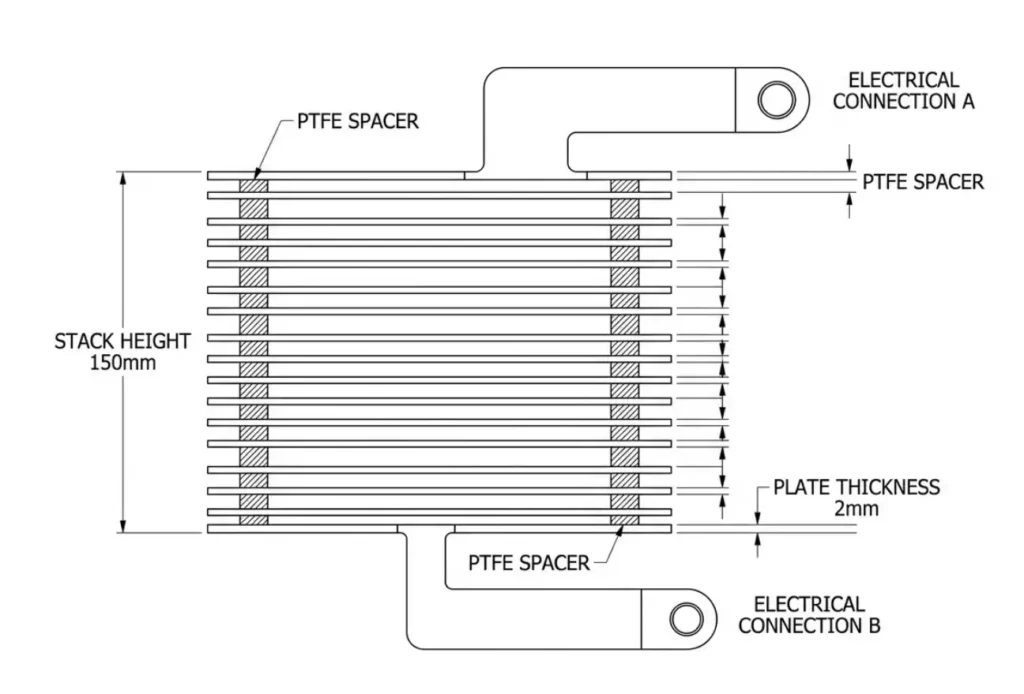
- Precision Engineering: We utilize PTFE spacers to maintain a perfectly uniform gap between plates. This ensures that every plate carries an identical current load, preventing premature failure of individual components.
- Global OEM Support: We provide end-to-end manufacturing for global pool brands, helping you reduce costs while delivering superior performance to your end-users.