
Cyanuric Acid Levels and Salt Cell Efficiency: Engineering Commercial Pool Water Chemistry
Managing commercial aquatic facilities requires an intricate understanding of electrochemical wear and photolytic degradation loops. Cyanuric acid (CYA) acts as a vital molecular stabilizer; however, its relative concentration directly dictates the ongoing operational parameters and overall salt cell efficiency of the disinfection plant. This chemical matrix functions as a strict double-edged sword. When stabilizer concentrations drop below critical thresholds, intense solar ultraviolet radiation rapidly depletes free available chlorine, forcing the electrolytic system into extended high-load duty cycles that accelerate precious metal coating degradation. Conversely, excessive stabilizer accumulation introduces severe kinetic resistance to the disinfection process, locking available halogen pools and causing redundant power consumption. For commercial asset managers and procurement officers, precisely regulating this chemical equilibrium is the foundational strategy to lower systemic equipment failure rates, stabilize predictable operational costs, and maximize the operational lifespan of the core salt water chlorinator cell infrastructure.

The Photolytic Decay Loop: How Cyanuric Acid Levels Insulate Free Chlorine
Outdoor commercial swimming pools lacking stabilized chemistry face immediate chemical degradation from solar UV-A and UV-B radiation. Under standard ambient exposure, ultraviolet rays dismantle the molecular structure of free available chlorine, causing up to 90% of the active biocide to dissipate within a mere two-hour window, resulting in a catastrophic loss of sanitizing efficacy.
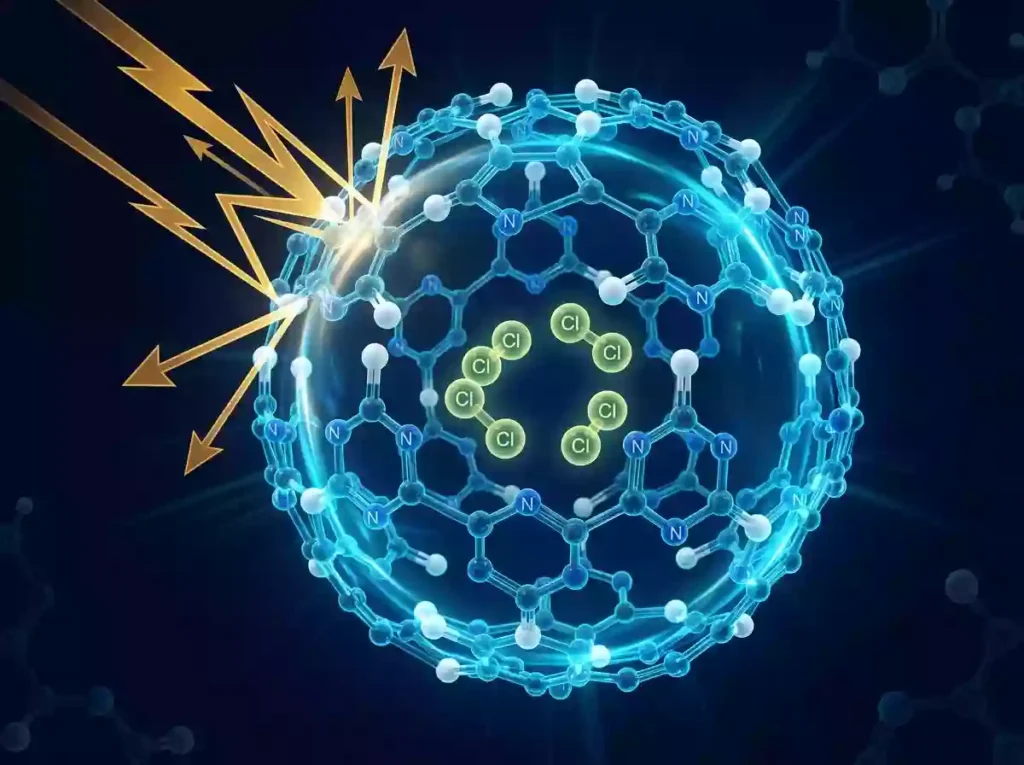
Maintaining engineered cyanuric acid levels mitigates this photolytic destruction via a reversible molecular bonding mechanism. Cyanuric acid chemically binds with hypochlorous acid to synthesize temporary chlorinated cyanurates. This pathway functions as a dynamic molecular shield, sequestering the volatile disinfectant species and insulating them from solar photolysis.
When pathogenic micro-organisms or organic loads enter the bulk pool water, these bound chemical structures autonomously dissociate, instantly re-leasing high-efficacy free available chlorine to execute rapid disinfection kinetics. This controlled cycle fundamentally curbs the natural, climate-driven depletion of chlorine, drastically reducing the continuous replenishment workload of the electrochlorination system without altering the core biochemical efficacy of the primary disinfectant stream.
Accelerated Duty Cycles: The Mechanical Cost of Low Stabilizer Concentrations on Salt Cell Efficiency
When the local stabilizer concentration within a commercial pool falls below 30 ppm, free available chlorine undergoes rapid photolytic decay. Automated water quality automation arrays continuously register these sub-threshold halogen residuals, triggering an immediate, unrelenting production response from the chlorinator’s central control hub.
To compensate for this continuous chemical deficit, the controller drives the electrolytic cell into continuous, 100% maximum output configurations. Under these prolonged high-load duty cycles, the electrode matrix is subjected to relentless current density stress. This unmitigated electrical loading induces significant thermal accumulation across the reactive zones, destabilizing the balanced electron transfer process and physically eroding the mixed metal oxide (MMO) catalytic coatings electrochemically fused to the raw titanium substrates.
As catalytic site activity degrades, the overall salt cell efficiency plummets, forcing higher kilowatt-hour consumption to achieve baseline chlorine mass outputs. This creates an aggressive degradation loop that drastically shortens the operational lifecycle of the salt cell, forcing premature component replacement liabilities and escalating overall asset maintenance overhead.
The “Chlorine Lock” Barrier: Maximizing Biocidal Kinetics in Commercial Pool Water Chemistry
Within the strict auditing frameworks governing commercial pool water chemistry, allowing cyanuric acid concentrations to cross the 100 ppm barrier precipitates a critical failure state known as “chlorine lock.” At this elevated threshold, the over-stabilized chemical matrix binds free chlorine too rigidly, severely suppressing the Oxidation-Reduction Potential (ORP) of the aquatic environment and arresting the release of active, uncombined hypochlorous acid.
This breach alters the critical free chlorine to CYA ratio, meaning that while standard DPD wet-chemical tests may register compliant total chlorine metrics, the actual biological disinfection kinetics are profoundly compromised. The contact time required to achieve a 3-log reduction of stubborn aquatic pathogens spikes exponentially. Under these parameters, running the electrochlorination machinery at maximum amperage yields zero net improvement in sanitation. The system essentially idles under high load, consuming substantial electrical utilities and burning through the finite lifespan of the titanium anodes without achieving pathogen control—a status that severely violates modern scientific water treatment protocols and inflates localized OPEX.
Passive Dissolution Limits: Electrode Degradation Mechanisms within the Salt Water Chlorinator Cell
When chemical instability forces frequent chemical shocks and manual water balance adjustments, the microfluidic boundary layer directly adjacent to the electrode faces inside the salt water chlorinator cell experiences violent pH fluctuations and localized high-amperation current crowding.
This combined chemical and electrical stress profile rapidly induces localized anodic passivation across the metal face, placing an insulating barrier over the active sites.
This passivation forces harmful oxygen evolution side-reactions to manifest during the chlor-alkali process. Under these intense parameters, low-tier mixed metal oxide formulations exhibit severe structural fatigue, resulting in catalytic coating blistering, micro-cracking, and localized delamination within only a few hundred hours of continuous field exposure.
Consequently, procurement engineers evaluating hardware options must prioritize the chemical fluctuation tolerance and mechanical fatigue resistance of the anode coatings. Century’s heavy-duty ruthenium-iridium MMO formulations are engineered precisely to withstand these boundary-layer chemical shocks, suppressing passivation, preserving long-term electron-transfer efficiency, and drastically reducing field replacement intervals for international commercial projects.
Optimizing TCO: Operational Savings with Century’s Engineered Electrochlorination Systems
Stabilizing cyanuric acid metrics strictly within the optimal 30 to 50 ppm window, combined with intelligent power modules utilizing automated reverse-polarity self-cleaning cycles, forms the blueprint for elite commercial water management.
Century’s complete electrochlorination system architecture features extensive metallurgical reinforcement engineered specifically to absorb routine chemical variances and boundary layer stress without experiencing premature scaling or electrode decay. By bypassing trading company markups through our direct-from-factory sourcing framework, global distributors and engineering procurement partners can drastically reduce initial CAPEX and long-term asset maintenance outlays. This factory-direct configuration extends equipment field deployment lifecycles under lower operational budgets, allowing international project partners to secure unmatched total cost of ownership (TCO) optimization across the entire municipal or commercial asset lifecycle.