
Chlorine vs. Oxygen Evolution in Titanium Anodes: Optimizing Electrochlorination Efficiency
During brine electrolysis, the primary chlorine evolution reaction and the parasitic oxygen evolution reaction occur simultaneously at the titanium anode. In practical water treatment applications, our sole objective is the generation of Free Available Chlorine (FAC). Oxygen generation not only wastes electrical energy but also severely accelerates electrode coating degradation. To suppress oxygen evolution and optimize electrochlorination efficiency, operators must strictly control brine salinity, maintain rational current densities, and regulate fluid temperatures within optimal ranges. Furthermore, sourcing dedicated MMO coated titanium anodes with high oxygen evolution overpotentials allows facilities to control these parasitic drains from a materials engineering standpoint, thereby maximizing electrical utilization.
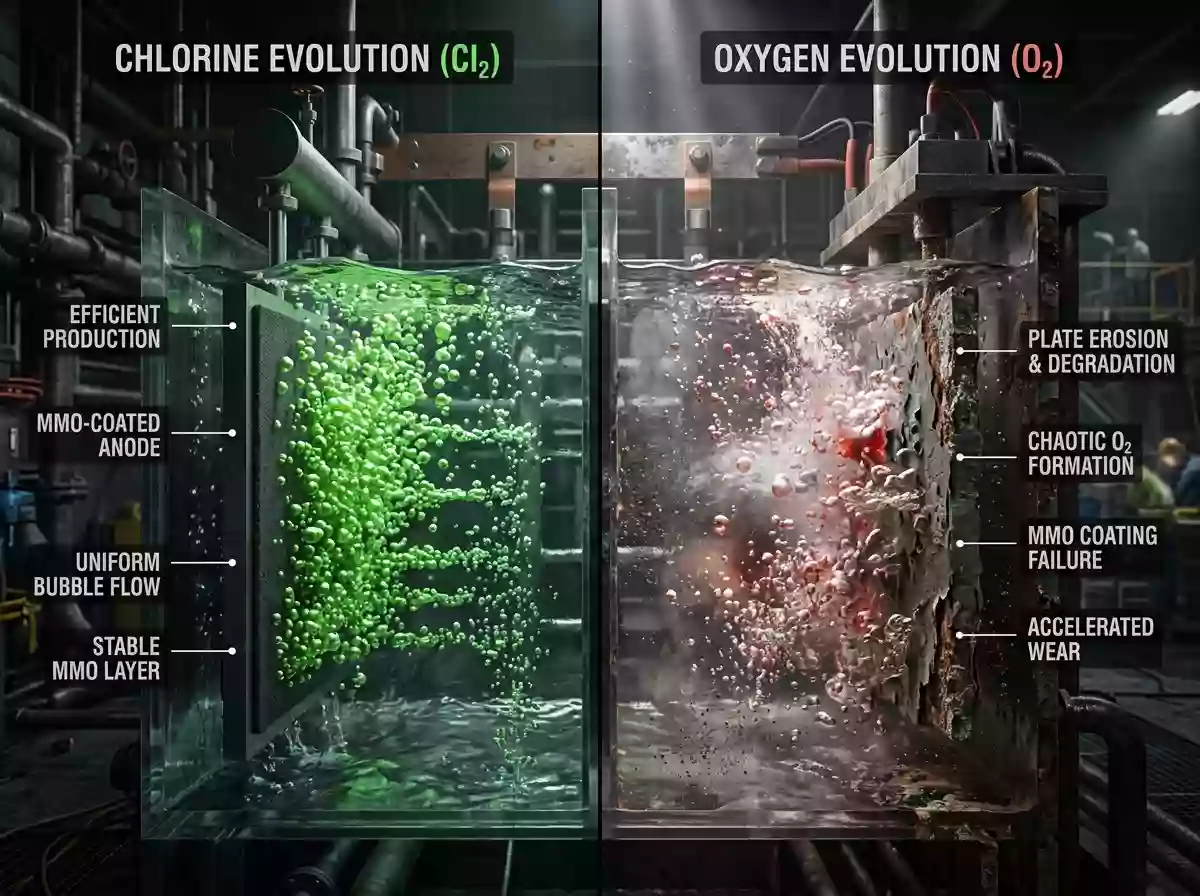
The Chemistry of Electrolysis: Chlorine Evolution Reaction (CER) Explained
In saltwater and seawater electrolysis systems, the core function of the anode is to drive the chlorine evolution reaction. The fundamental equation is
2Cl−→Cl2+2e−
where chloride ions lose electrons to generate chlorine gas, which immediately converts into disinfecting sodium hypochlorite.
Pure titanium substrates naturally form a passivating oxide layer, rendering them highly non-conductive and catalytically inert for direct chlorine evolution. Therefore, a precious metal oxide coating must be sintered onto the surface. This catalytic layer drastically lowers the chlorine evolution overpotential, reducing the thermodynamic barrier and allowing chlorine gas to evolve smoothly.
When the chlorine evolution reaction operates at peak efficiency, the overall working voltage of the electrochlorination cell drops significantly. This reduction in power consumption ensures the system generates sufficient active chlorine at the lowest possible operational expenditure (OPEX), elevating the economic viability of the entire sodium hypochlorite generator.
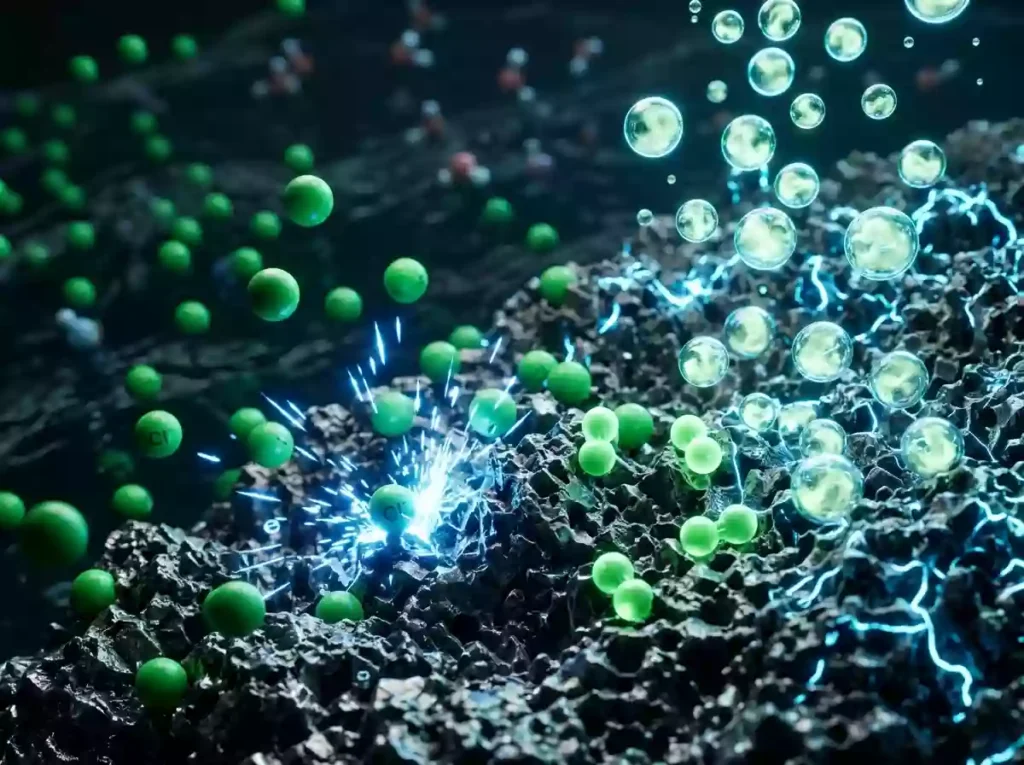
The Parasitic Drain: Why the Oxygen Evolution Reaction (OER) is the Enemy
At the working interface of the titanium anode, the oxygen evolution reaction
2H2O→O2+4H++4e−
remains in constant competition with CER for electrical current. As both electrochemical reactions proceed simultaneously, limited electrical energy is siphoned off.
OER produces zero sanitizing chlorine, acting purely as a parasitic drain that directly inflates power costs. More critically, this reaction releases a massive influx of hydrogen ions at the electrode surface, creating a highly localized acidic micro-environment, accompanied by the generation of aggressive oxygen radicals.
These highly corrosive byproducts relentlessly attack the MMO anode coating. They physically and chemically dissolve the core catalytic Ruthenium components, accelerating the continuous loosening, cracking, and eventual delamination of the coating matrix. This not only decimates chlorine production capacity but drastically shortens the overall service life of the titanium anode, acting as the primary catalyst for premature electrode failure.
Formulating the Right MMO Anode Coating: Ru-Ir vs. Ir-Ta
Understanding this electrochemical rivalry highlights why formulating the correct MMO anode coating is the ultimate solution to balancing reaction efficiency and lifespan—and it remains our core manufacturing advantage.
Ruthenium-Iridium (Ru-Ir) coatings are engineered specifically for high-salinity environments like commercial pools and seawater. They possess an exceptionally low chlorine evolution potential, preferentially driving chloride ions to react while aggressively suppressing OER. However, this coating’s resistance to acidic corrosion is moderate; in chloride-deficient water, it is easily consumed by parasitic byproducts.
Conversely, in municipal water or wastewater applications with low chloride levels, severe oxygen evolution is inevitable. In these scenarios, Ru-Ir is entirely unsuitable. While Iridium-Tantalum (Ir-Ta) coatings may not match the sheer CER efficiency of Ru-Ir, they exhibit unparalleled resistance to OER corrosion. The Tantalum acts as an impenetrable shield against oxygen radicals and acidic pH drops, stabilizing the coating structure and drastically extending the anode’s lifespan in low-salinity conditions.
Field Variables: What Triggers Unwanted Oxygen Evolution?
In field operations, several abnormal parameters can violently trigger unwanted oxygen evolution.
Chloride ion starvation is the most common culprit. When the salinity of pools or water treatment systems drops below 2500 ppm, the electrolyte lacks sufficient chloride ions. Unable to sustain CER, the anode is forced to electrolyze water molecules directly, causing OER to skyrocket alongside power consumption.
Excessive current density is another critical factor. To cut initial hardware costs, many buyers source undersized plates and subject them to sustained loads exceeding 1000 A/m². This over-driving shatters the CER threshold, forcing the entire surface into violent oxygen evolution. Under these extreme conditions, an anode engineered for a five-year lifespan can be destroyed in a mere three months.
Additionally, low environmental water temperatures increase the overall electrical resistance of the electrolyte. This drives up the cell voltage, disrupting the reaction equilibrium and indirectly stimulating OER, which suffocates chlorine yield and accelerates coating degradation.
Engineering Precision: Sourcing from a Top Titanium Anode Manufacturer
The market is flooded with generic titanium anodes suffering from unbalanced coating formulations. Once deployed, they fail to sustain stable chlorine evolution, wasting massive amounts of electricity on parasitic OER. This results in inflated energy bills and severely compromised electrode longevity. As a premier titanium anode manufacturer, Century maintains an independent electrochemical R&D department, rejecting the “one-size-fits-all” commodity model. Based on your site’s specific water chemistry and operating parameters, we precisely engineer the molar ratio of our Ruthenium and Iridium components. By delivering custom-tailored anodes, we maximize your primary chlorine reaction and suppress parasitic drains from the source, guaranteeing both peak chlorination efficiency and heavy-duty durability.