
Re-coating Titanium Anodes: Cost-Benefit Analysis for Commercial Water Treatment Systems
In the lifecycle asset management of modern commercial water treatment systems, optimizing the durability of electrochemical components is the absolute cornerstone of controlling operational expenditure (OPEX). When the mixed metal oxide catalytic layer on a titanium substrate reaches its terminal passivation threshold, plant operators face a critical strategic crossroads: invest in brand-new replacement matrices or opt for re-coating titanium anodes utilizing existing structures. While a localized refurbishment protocol initially seems to lower upfront capital expenditure (CAPEX), procurement decisions must look far beyond short-term pricing dynamics. Factors such as substrate structural fatigue, interfacial resistance, and localized current distribution directly dictate the long-term operational value of refurbished electrodes. This engineering evaluation combines real-world field conditions, projected runtimes, and total cost of ownership (TCO) variables to deliver an objective matrix for industrial asset allocation.
The Economic Illusion: Evaluating True MMO Recoating Cost Against Full Replacement CAPEX
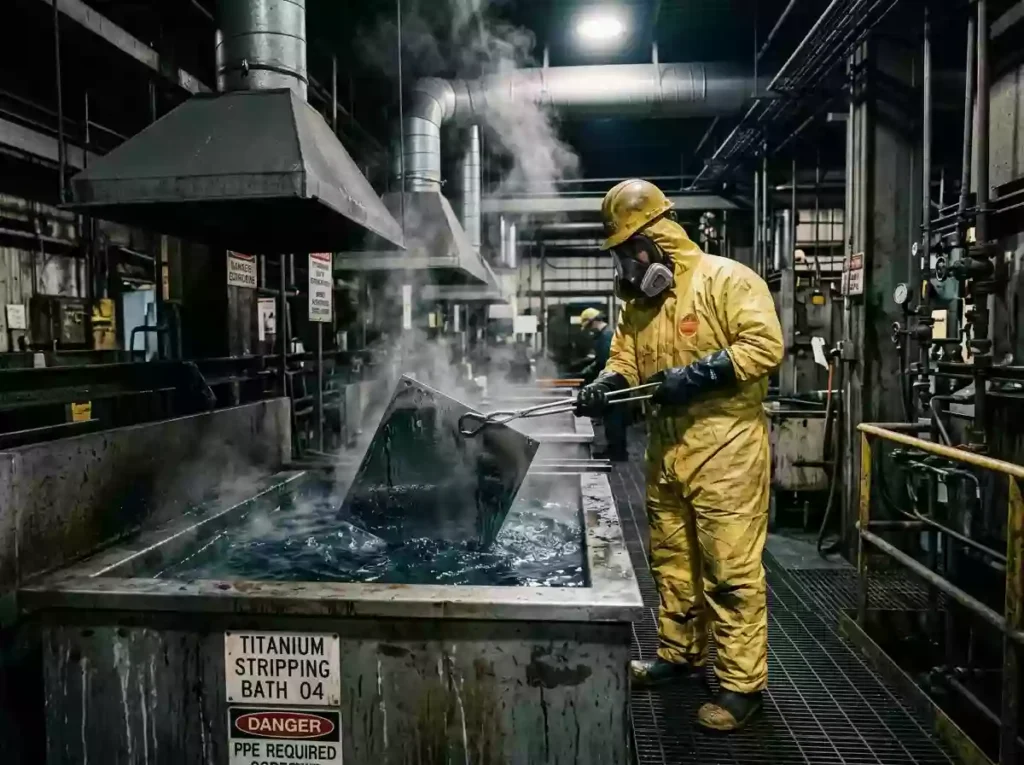
Unregulated third-party plating shops frequently construct initial quotations that only cover the superficial application of the catalytic solution, deliberately omitting multiple mandatory processing steps from their pricing. A scientifically sound refurbishment sequence cannot simply paint over spent oxides; it demands the complete chemical stripping of the passivation matrix using hazardous agents like hydrofluoric acid and hot oxalic acid, which introduces high chemical processing and environmental compliance overheads. Furthermore, international logistics, customs clearance timelines, and specialized freight handling consume substantial operational windows, during which the core water treatment system experiences forced downtime, generating significant indirect revenue losses. Once the true processing fees, freight liabilities, and downtime penalties are calculated, the price variance between a refurbished component and a factory-new assembly narrows drastically. The strategy completely loses its long-term investment utility, making complete asset replacement the only rational corporate choice.
Substrate Fatigue and Stripping Pitfalls: The Structural Risks in Titanium Anode Refurbishment
Titanium electrodes deployed in high-load industrial water treatment operate under intense current densities and aggressive, cyclical acid-base micro-environments for thousands of hours. Under these severe parameters, the raw titanium substrate suffers from irreversible intergranular corrosion and severe hydrogen embrittlement caused by continuous hydrogen evolution side-reactions. This deep, internal metallurgical degradation cannot be repaired or reversed by simply overlaying a fresh mixed metal oxide film.
During the chemical stripping phase required for titanium anode refurbishment, the already fatigued base metal is subjected to further aggressive acid digestion. This exposure often leads to localized structural thinning, micro-warping, and microstructural defects that permanently compromise the component’s mechanical stability. Consequently, the newly applied ruthenium-iridium catalytic matrix suffers from sharply degraded adhesion strength. Once reintroduced into active field service, these refurbished electrodes frequently experience premature coating delamination, blistering, and catastrophic peeling within mere months of deployment, delivering a lifespan and operational stability far below factory standards.
Performance Variance: Predicting Accelerated Cell Runtimes After Re-coating Titanium Anodes
For high-load municipal waterworks and critical industrial disinfection loops, predictable runtime stability is paramount. Due to the inherent metallurgical aging of the underlying metal substrate, the electrochemical profile of refurbished electrodes is significantly inferior to factory-fresh counterparts. Real-world field data indicates that the actual operational runtime of a re-coated plate drops to just 50% to 70% of a brand-new original, showing an undeniable performance gap during standardized accelerated life testing (ALT).
Refurbished plates routinely exhibit significantly elevated interfacial resistance between the base metal and the newly applied oxide layer. This resistance penalty forces the overall cell voltage to operate at a higher baseline while inducing frequent, volatile voltage fluctuations. In continuous, 24/7 municipal or large-scale commercial facilities, a minor voltage increase of just 0.1 V scales up dramatically into substantial extra power consumption. This creeping annual utility overhead rapidly negates whatever initial hardware savings were achieved through the refurbishment option, transforming a seemingly low-cost CAPEX alternative into a long-term operational deficit.
Systemic Downstream Risks: Impact on Long-Term Industrial Electrochemical Cell Maintenance
Such critical failure vectors force maintenance engineers to increase manual inspection frequencies and trigger frequent unscheduled plant shutdowns. As these compounding operational liabilities accumulate, the comprehensive workload and cost associated with industrial electrochemical cell maintenance climb exponentially, completely exceeding initial operational budgets and introducing severe safety risks into automated water processing lines.
Century’s Advisory Framework: Selecting Between Refurbished Assets and New Water Treatment Systems
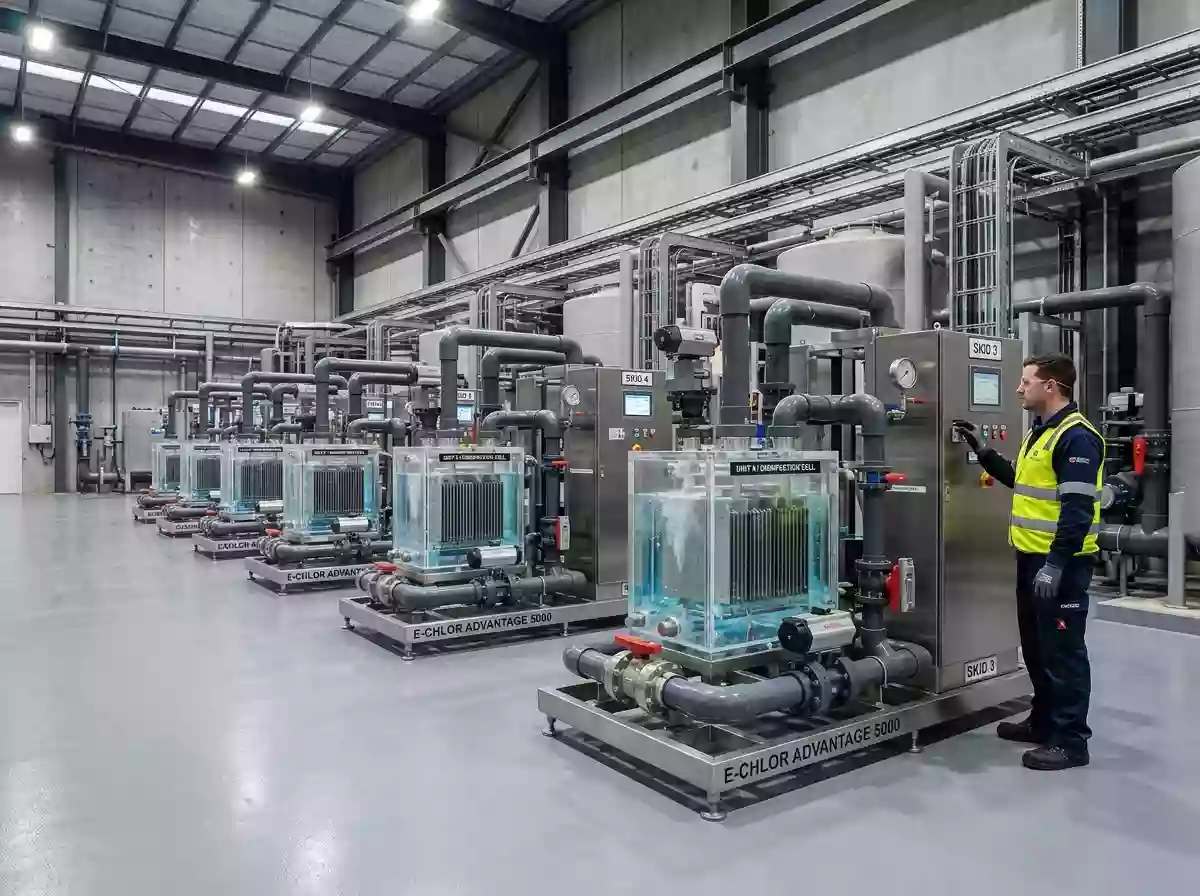
To assist global engineering procurement corporations and municipal operators in executing optimal asset allocation, Century has established an objective technical decision matrix to guide the choice between component refurbishment and new asset acquisition. We define explicit metallurgical boundaries: if a titanium substrate has accumulated over 5 years of active field service, exhibits visible surface indentations or physical warping, or operates in high-current-density oxygen evolution environments, a refurbishment strategy should be rejected immediately in favor of a complete chlorinator cell replacement.
Leveraging our highly optimized, factory-direct supply chain architecture, Century eliminates intermediate distribution markups, substantially lowering the procurement cost of premium, factory-new electrodes and further narrowing the price gap with third-party refurbishment services. When assessing substrate fatigue, cell runtime predictability, and long-term TCO, prioritizing factory-original Century electrodes ensures that the entire electrochemical system achieves maximum operational uptime while eliminating the hidden liabilities of refurbished assets.