
Generic vs. Name Brand Salt Cells: Is the Premium Price for OEM Actually Worth It?
When configuring equipment for a commercial facility or a residential pool route, pool industry professionals constantly face a pricing dilemma. Specifying a name-brand salt cell often inflates the total project quote, potentially costing you the bid. Conversely, installing a cheap, no-name generic unit introduces massive liability. These low-cost alternatives lack quality control, offering no guarantee of operational lifespan or reliability, ultimately leading to a nightmare of callbacks, field failures, and frustrated clients.
Many buyers only look at the upfront invoice difference, completely missing the fundamental disparities in raw materials and manufacturing processes. In this guide, we will strip away the marketing fluff and brand premiums. We will break down the true value of these products across three professional dimensions: actual manufacturing integrity, plate coating technology, and long-term warranty risks.
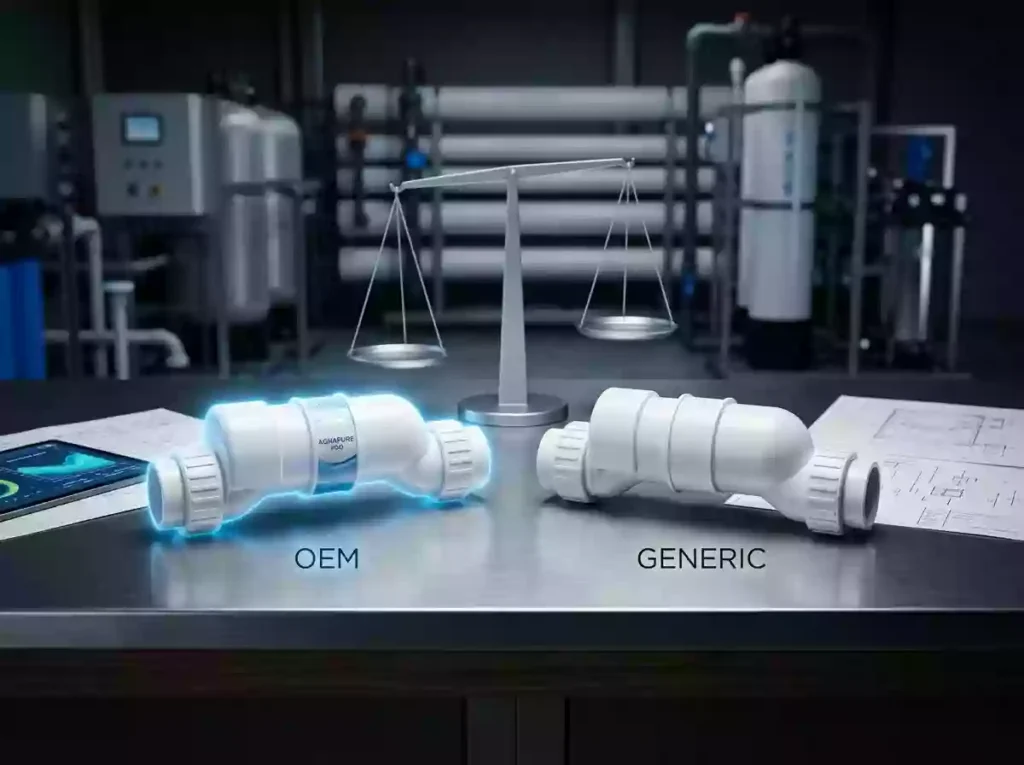
By objectively analyzing the real value behind OEM (Original Equipment Manufacturer) components versus aftermarket options, distributors, builders, and service companies can determine if the high-tier pricing is a necessary investment, allowing you to source the most reliable, cost-effective solutions for your business.
What Are You Actually Buying? The Anatomy of an OEM vs. Generic Salt Cell
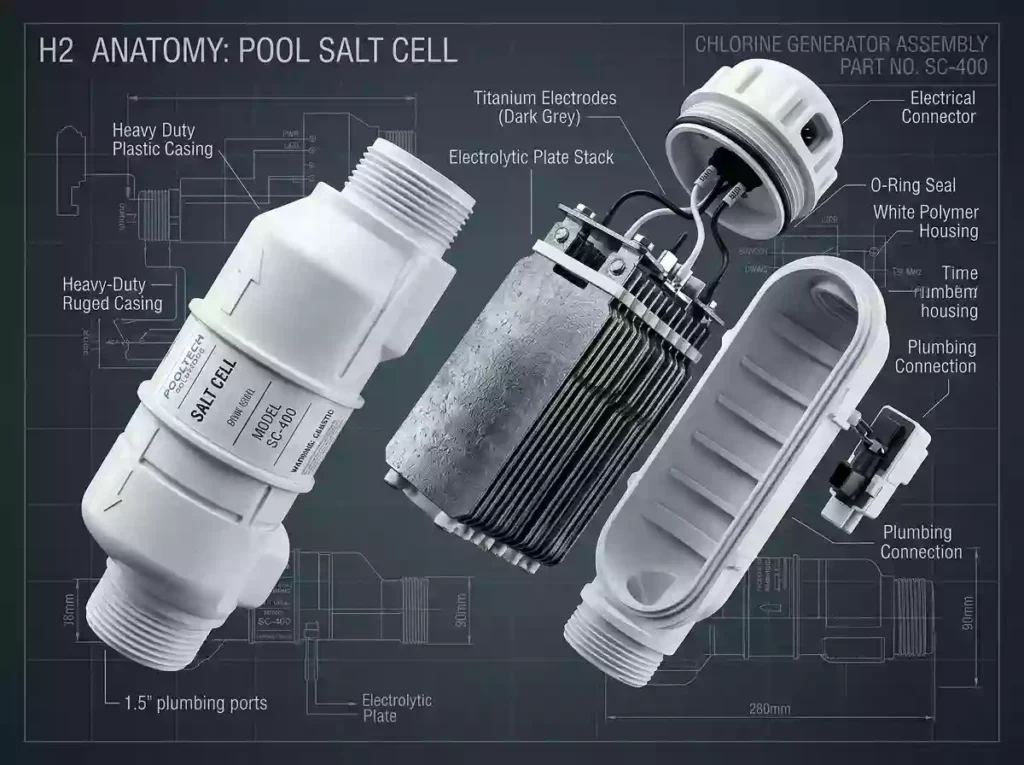
To understand the price gap, you must look at the three critical components that dictate a generic salt cell‘s performance: the titanium plates, the surface coating, and the outer housing. The thickness and purity of the titanium substrate directly dictate durability. The coating is the engine of the unit; high-quality coatings contain a rich ratio of precious metals bonded through advanced techniques. To cut costs, inferior models use thin coatings with poor adhesion that flake off rapidly. Finally, the housing determines pressure tolerance. Cheap plastics and unstable injection molding lead to hairline cracks, leaks, and severe secondary damage to the equipment pad.
Name-brand manufacturers carry heavy overhead. They invest heavily in initial R&D, optimize their coating stability, and maintain massive global marketing channels and warranty networks. This ensures strict quality control and unit-to-unit consistency. However, this long distribution chain and the inherent brand markup result in exceptionally high retail prices.
The aftermarket pool salt cell industry, on the other hand, is heavily polarized. At the bottom are substandard products from unverified “garage-style” assembly shops—built with inferior materials that suffer from frequent electrochemical failures. At the top are factory-direct brands like Century. As an experienced electrochlorination manufacturer, we utilize mature, industrial-grade production systems to output our own line of cells. These units match name-brand performance and offer a far superior price-to-performance ratio, making them the preferred choice for volume purchasers.
The “Coating” Factor: Why Some Generic Cells Fail in 12 Months
The absolute core of a salt cell’s lifespan lies in the Ruthenium-Iridium coating sintered onto the titanium plates. The weight of these precious metals per square meter and the application thickness are the ultimate technical indicators of value.
Major OEM brands apply a dense, uniform layer of Ruthenium-Iridium. They utilize a mature, high-temperature baking and sintering process that permanently bonds the coating to the titanium substrate. This ensures extreme resistance to electrolytic corrosion, allowing the cell to maintain optimal chlorine production for a standard 10,000-hour life rating.
Low-end generic manufacturers intentionally slash the precious metal content to drive down their wholesale price. Their coatings are applied micro-thin and unevenly. When initially installed, these units generate chlorine perfectly fine—the visual output looks identical. However, under the constant stress of electrolysis, these thin coatings deplete and flake off rapidly. Within 12 to 18 months, the cell loses its catalytic ability entirely and dies.
When calculating salt cell life expectancy, the purchase price is only half the equation. A premium unit will reliably run for five or more years. A cheap generic might last one or two seasons. When you factor in the labor costs of repeat installations, angry customer phone calls, and constant replacement parts, the “cheap” cell is mathematically much more expensive.
Structural Integrity: Is the Plastic Housing Safe for High-Pressure Systems?
The plastic housing of a salt cell might look like a simple protective shell, but it is a critical pressure vessel in a high-volume water circulation system. Its safety depends entirely on the grade of raw materials and the precision of the injection molding process.
Legitimate manufacturers utilize high-grade, UV-stabilized polycarbonate or specialized ABS blends. Before leaving the factory floor, these housings undergo strict burst and sustained pressure testing (often rated for 50+ PSI). They are engineered to withstand years of pipeline water hammer, temperature fluctuations, and aggressive outdoor sun exposure without warping or becoming brittle.
In contrast, budget generics often use recycled plastics or low-grade polymers to save pennies. Their injection molding processes are rushed, leaving internal stress points. After a season of UV exposure and chlorine contact, these cheap housings become brittle. Once a housing cracks under pressure, the resulting equipment pad flood can short out expensive variable-speed pumps and heater circuit boards.
When sourcing an aftermarket pool salt cell, never shop by price alone. Prioritize products that are explicitly marked as pressure-tested and manufactured with commercial-grade engineering plastics. This matches the demands of high-pressure plumbing and eliminates the liability of catastrophic leaks.
The Invisible Cost: Warranty Support and Component Compatibility
Two massive hidden costs often blindside buyers: warranty logistics and electronic compatibility.
While OEM brands offer solid, documented warranty terms, the claims process can be painfully slow. Submitting paperwork, waiting for factory approval, and dealing with technical support queues can stall your field operations. With generic units, there is rarely a global warranty network; your protection relies entirely on the distributor you bought from. Sourcing from a reputable factory partner is the only way to ensure you have a legitimate safety net.
The second, more insidious issue is sensor compatibility. When a technician is dealing with an OEM vs aftermarket salt cell decision, specifically something like a Hayward salt cell replacement, exact electronic communication is mandatory. Many cheap generics use poorly calibrated thermistors (water temperature sensors) or inaccurate salinity sensors. This causes the main control board to display false “Low Salt” or “Cold Water” errors, shutting down chlorine production even when the water chemistry is perfect. Century engineers our generic replacements with precise OEM-spec sensors and standard union threads. We ensure a true “drop-in replacement” experience, eliminating installation headaches and sensor misreads right out of the box.
How to Source a High-Quality Aftermarket Salt Cell Without Getting Burned
If you are trying to find the best generic salt chlorinator for your route or retail store, you need a practical checklist to avoid getting burned by bad factories.
First, visually inspect the plastic housing; it should be perfectly smooth, heavy, and free of injection molding burrs or flash. Second, look closely at the titanium plates. A high-quality ruthenium coating will have a slightly matte, textured appearance, not a highly polished, shiny surface.For B2B buyers, the ultimate rule is to bypass standard trading companies and source directly from a manufacturer with a documented background in electrochemical engineering. Factories that formulate their own coatings, control the high-temperature sintering, and inject their own plastics will inherently have lower defect rates. These are the partners capable of supplying reliable, volume aftermarket units.
Conclusion: Century’s Approach to the Price-to-Performance Ratio
Looking across the current market, it is undeniable that major brands carry a significant price premium. However, chasing the absolute lowest price on standard marketplaces forces you to sacrifice material standards, structural safety, and long-term lifespan, ultimately resulting in much higher operational costs down the road.
Century operates strictly in the high-performance value tier. We manufacture our products using the exact same quality control standards and electrolytic processes as tier-one brands, but we strip away the bloated marketing budgets and multi-level distribution markups. Through vertical integration—controlling everything from titanium sourcing and precious metal coating to plastic injection molding—we deliver generic-priced units with OEM-level reliability. For distributors and service professionals, Century provides a sourcing solution that perfectly balances upfront cost, installation safety, and years of durable performance.