
How to Clean a Pool Salt Cell Without Harsh Acid: A Manufacturer’s Guide to Protecting Plate Coatings
In the world of routine pool maintenance, service technicians often default to a heavy-duty muriatic acid bath the moment they spot calcium buildup on a salt cell. While this method is fast, it is a “money-burning” habit that creates safety risks and, more importantly, inflicts irreversible damage on your equipment.
As a dedicated manufacturer of electrochlorination systems, Century issues a clear warning: frequent cleaning with harsh acids is the leading cause of premature titanium plate failure. The aggressive nature of muriatic acid doesn’t just dissolve scale; it strips away the delicate ruthenium-iridium coating, significantly shortening the cell’s operational life. Today, we will share the professional manufacturer’s method for how to clean a salt cell effectively using gentle alternatives that maximize your equipment’s lifespan and slash long-term maintenance costs.
The Hidden Cost of Acid: Why Harsh Chemicals Destroy Your Salt Cell
Most people don’t realize that the primary cost of a salt cell isn’t the titanium itself, but the few microns of precious metal coating—specifically Ruthenium and Iridium—sintered onto the plates. This coating is the “engine” of electrolysis; without it, the cell cannot generate chlorine.
While muriatic acid melts calcium scale instantly, its corrosive profile is too high for regular use. Every acid wash acts like sandpaper, removing a layer of that expensive coating. Over time, the plates lose their electrochemical activity, leading to system failure.
To clean salt cell without acid is to protect your investment. Harsh chemicals should be reserved only for severe, “calcified-concrete” scenarios. For standard salt cell maintenance, a gentler approach ensures your plates remain active for their full rated lifespan rather than heading to the scrap heap early.
Safe Alternatives: How to Clean Salt Cell Without Acid
Skipping the aggressive muriatic acid bath does not mean compromising on maintenance efficiency. Learning how to clean salt cell without acid—specifically by utilizing mild, eco-friendly alternatives like distilled white vinegar—allows pool technicians to dissolve stubborn calcium carbonate scaling effectively. This gentle biochemical approach successfully strips away debris while keeping the delicate ruthenium-iridium MMO coating completely intact, significantly extending the operational life of your titanium plates.
Understanding the Enemy: What Causes Calcium Buildup on Salt Cell Plates?
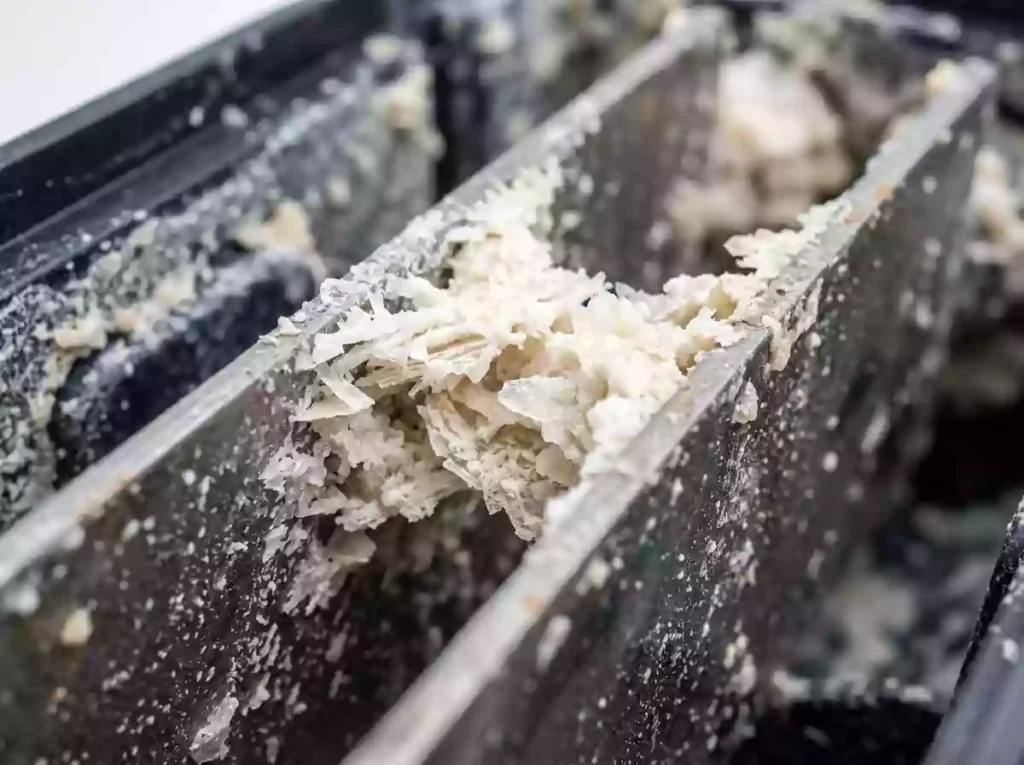
To solve the scaling problem, you must understand the chemistry at play. Calcium buildup on salt cell plates is a byproduct of the electrolysis process itself. As the cell generates chlorine at the cathode, the local pH level at the plate surface spikes, creating a highly alkaline environment.
This high pH forces calcium ions in the water to precipitate out of solution and crystallize on the plates. These white, flaky deposits act as an insulator. As the scale thickens, it restricts water flow and increases electrical resistance. This causes your chlorine output to plummet, triggers nuisance alarms on your control board, and forces the power supply to work harder, eventually damaging the internal circuitry.
The Safe Alternative: Cleaning a Salt Cell with Vinegar (Acetic Acid)
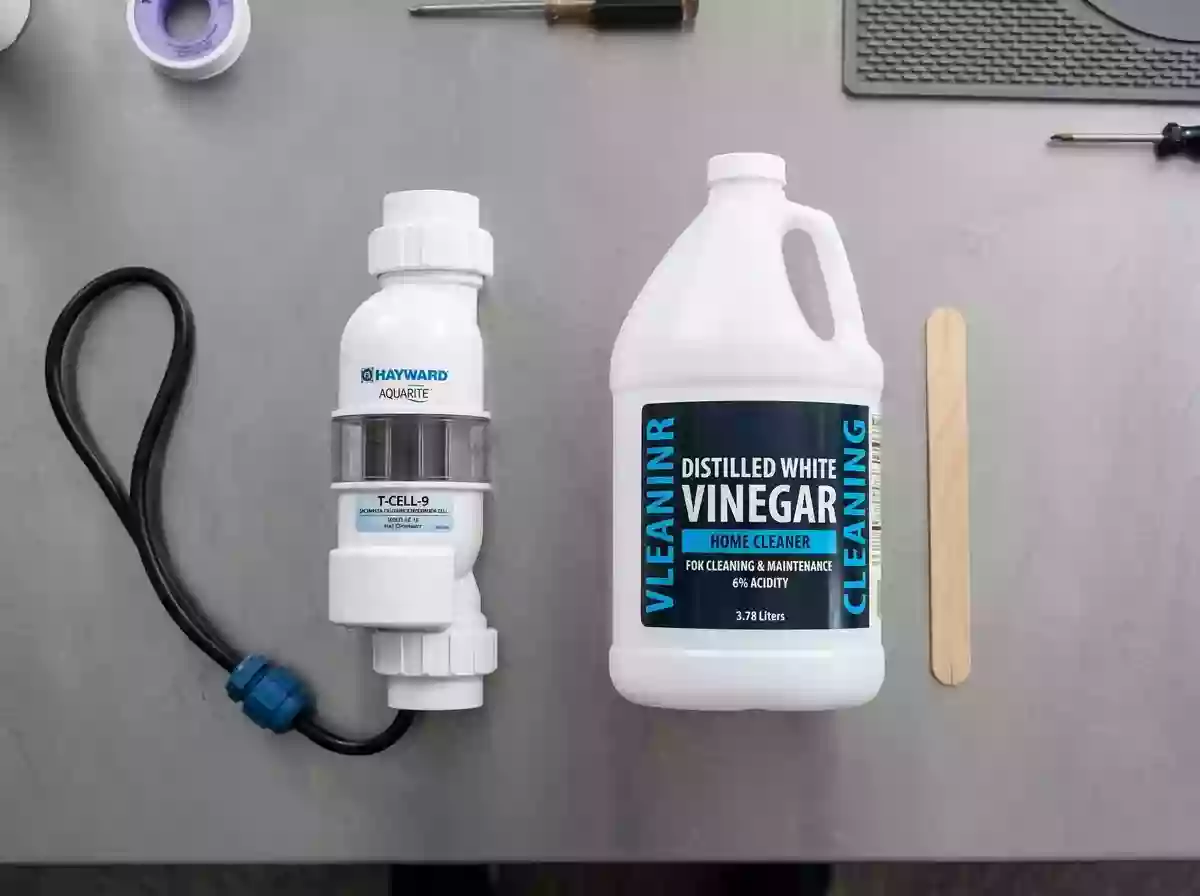
When it’s time for a cleaning, reach for white vinegar instead of muriatic acid. The active ingredient in vinegar is acetic acid—a weak organic acid that is exceptionally effective at dissolving calcium carbonate without the violent corrosiveness of mineral acids.
The advantage of cleaning salt cell with vinegar is its selectivity. It reacts with the scale but remains inert toward the titanium substrate and the ruthenium-iridium coating. While it takes longer to work—often requiring a few hours or an overnight soak—this “time-for-life” trade-off is the smartest financial decision a pool manager can make. It keeps the core components of the salt cell pristine while effectively removing 100% of the buildup.
Step-by-Step: How to Clean a Salt Cell Like a Pro (Without the Danger)
Follow this manufacturer-approved SOP to ensure a safe and thorough clean without damaging your plate coatings:
- Inspect First: Power down the system and remove the cell. Check the plates. If the scale is loose and “muddy,” you might not even need chemicals. A high-pressure garden hose can often blast away light debris immediately.
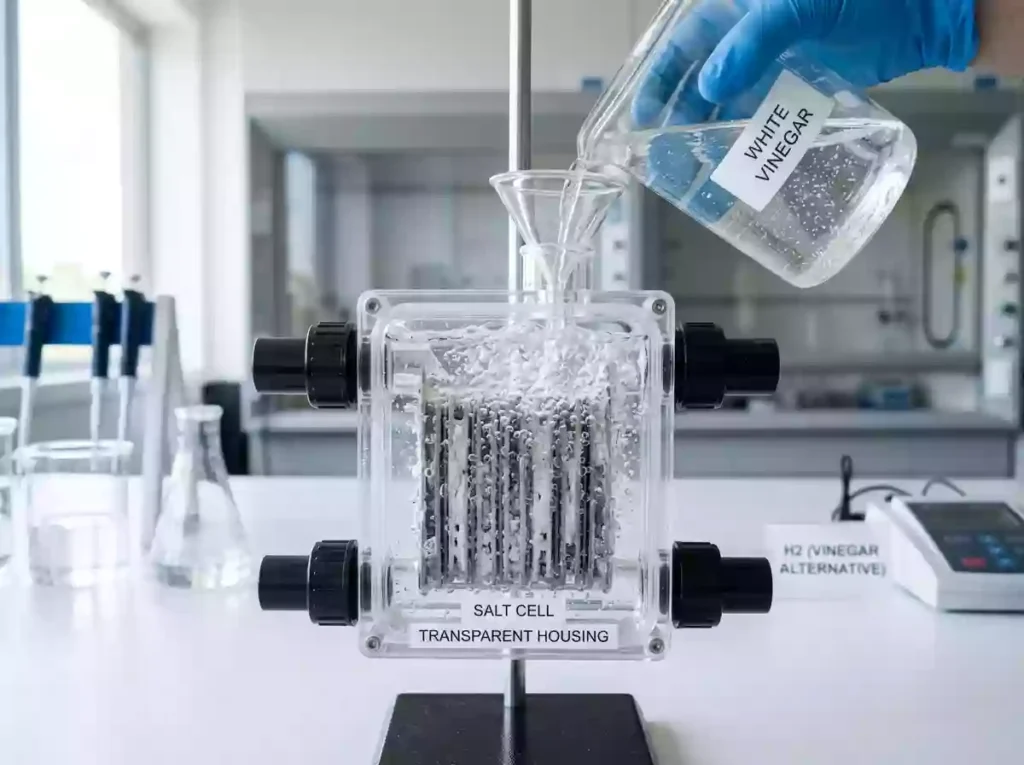
- Secure the Salt Cell Cleaning Stand: Use a dedicated cleaning stand to seal one end of the cell. This is critical for keeping the cleaning solution contained and protecting the external electrical pins from moisture.
- The Vinegar Soak: Fill the cell with 100% undiluted white vinegar. You will see gentle bubbling—this is the acetic acid working.
- Mechanical Assistance (No Metal!): Let it soak for 2–3 hours. If stubborn spots remain, never use a metal screwdriver to scrape the plates. Use a wooden popsicle stick or a plastic scraper to gently dislodge the scale. Metal tools will scratch the coating, creating a site for accelerated corrosion.
- Rinse and Reinstall: Drain the vinegar, rinse the plates thoroughly with fresh water to remove any residual odor or loosened scale, and reinstall the unit.
Preventive Salt Cell Maintenance: Stopping Scale Before It Starts
The most cost-effective cleaning is the one you never have to do. High-level salt cell maintenance focuses on prevention:
- Balance the LSI: Keep your Langelier Saturation Index (LSI) between -0.3 and +0.3. This prevents the water from becoming “scale-forming.”
- Verify Reverse Polarity: Ensure your system’s self-cleaning (reverse polarity) feature is functioning. This feature automatically sheds light scale by switching the charge of the plates.
- Routine Inspection: Catching scale early allows for simple water-pressure cleaning, avoiding the need for any acid or vinegar soaking altogether.
When Cleaning Isn’t Enough: Is It Time for a Salt Cell Replacement?
If you have cleaned your cell perfectly but the control panel still displays a “Low Salt” or “Inspect Cell” light despite proper salt levels, the coating has likely reached its end of life. Once the precious metal is depleted, no amount of cleaning will restore chlorine production.
For pool professionals and distributors, this is the time to choose a high-quality salt cell replacement. Century’s OEM cells feature ultra-thick coatings and advanced sintering technology, designed specifically to withstand higher LSI fluctuations and offer superior scale resistance. Upgrading to a Century cell reduces warranty callbacks and provides your clients with a longer-lasting, more reliable chlorination solution.