
How to Winterize Your Pool Salt Cell: A Manufacturer’s Guide to Preventing Freeze Damage
Every spring, our facility receives a flood of ruined salt cells—housings cracked wide open and titanium plate coatings severely degraded. After inspection, the diagnosis is almost always the same: this is not a manufacturing defect; it is a complete failure to winterize the equipment properly.
As a professional manufacturer of electrochlorination equipment, we have a hard rule: once the pool water temperature drops below 60°F (15°C), your salt cell must stop generating chlorine. Running a cell in cold water drastically accelerates the depletion of the rare-earth plate coatings. More importantly, if your region experiences freezing weather, you must fully winterize the system. Leaving residual water inside the cell to freeze will physically destroy the unit.
Below is our manufacturer-approved standard operating procedure to protect your equipment, avoid unnecessary replacements, and maximize the lifespan of your salt cell.
Step-by-Step: How to Winterize Pool Salt Cell Systems
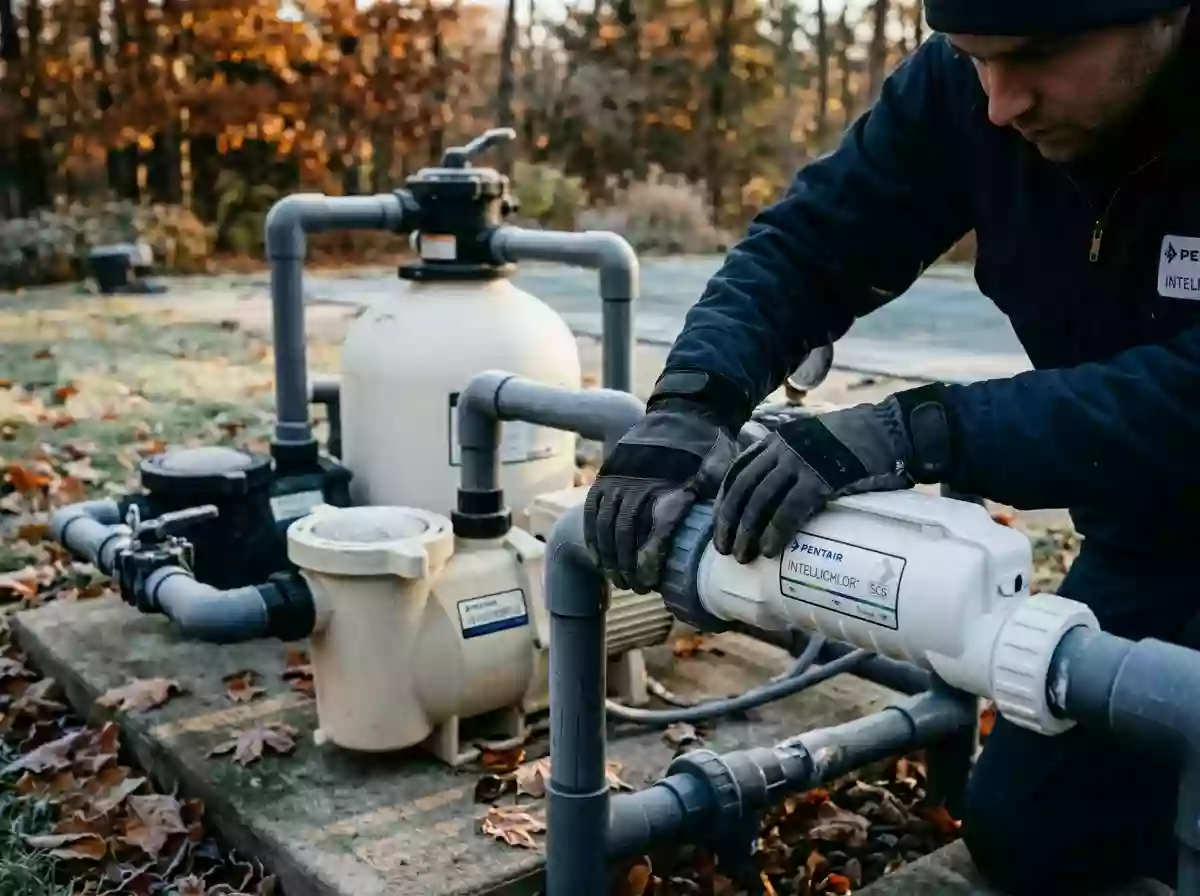
Understanding the risks of freezing temperatures is only the first step. To ensure your equipment survives the winter, you must know exactly how to winterize pool salt cell components properly. In the detailed procedure below, we outline the exact steps required to safely disconnect the housing, drain all residual water, and properly store your titanium electrolytic cell until the spring season returns.
The Physics of Ice: Why Freeze Damage Ruins Pool Equipment
Many pool owners know that freezing temperatures break things, but understanding the physics behind freeze damage pool equipment is crucial. The core issue is volumetric expansion. When water turns to ice, it expands by approximately 9%.
When water is trapped inside the closed environment of a salt cell or plumbing line, this 9% expansion generates immense hydraulic pressure. This force has nowhere to go. It easily shatters heavy-duty engineering plastics, resulting in a cracked housing. Furthermore, the expanding ice crushes the internal titanium anode plates, stripping away the delicate ruthenium-iridium coating and rendering the cell useless.
It is important to note that freeze damage is entirely preventable and is considered user error. Therefore, manufacturer warranties do not cover ice-related destruction. Proper winterization is your only defense against a total equipment write-off.

Step 1: The Importance of Cleaning a Salt Cell Before Winter
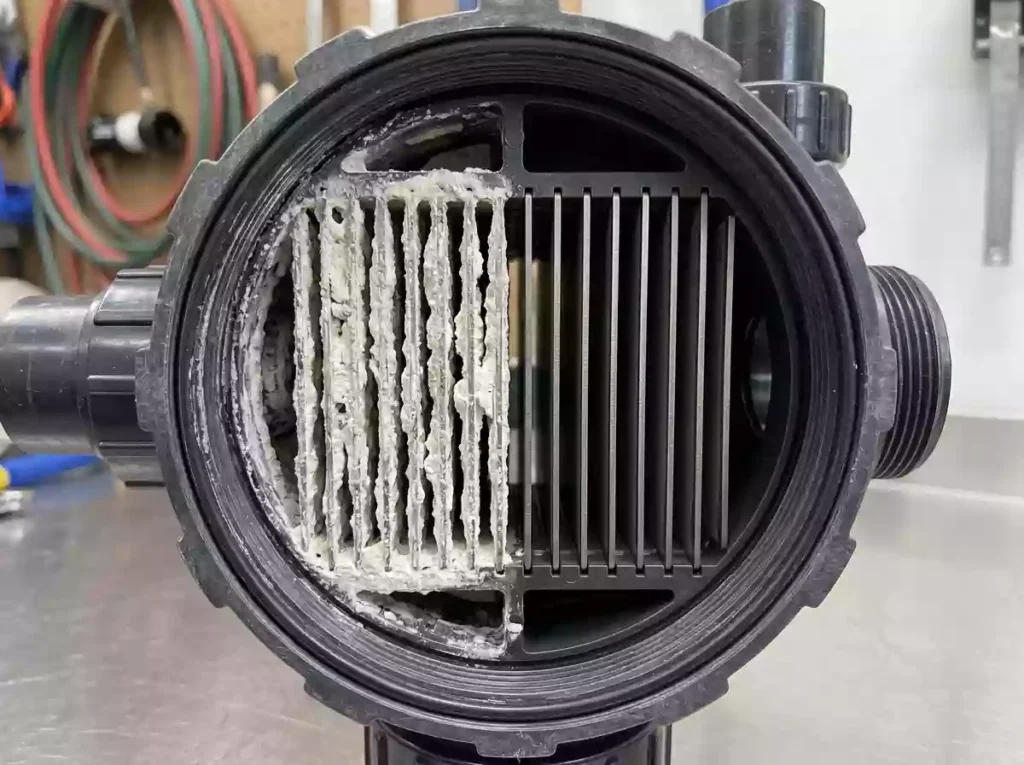
A common, fatal mistake is unscrewing the cell and throwing it straight into the garage for the winter. You must prioritize cleaning salt cell before winter. Never store a scaled cell.
If calcium scale remains on the titanium plates, the long, dry winter months will cause that buildup to harden like concrete, bonding permanently to the metal. When spring arrives, you will be forced to use an aggressively strong acid mixture to remove it. This harsh chemical exposure aggressively strips the coating off the plates, permanently shortening the cell’s lifespan.
Before storage, perform a thorough muriatic acid salt cell cleaning (using a mild, heavily diluted muriatic acid-to-water ratio) to dissolve all scale. Ensure the plates are completely pristine before packing the unit away.
Step 2: How to Correctly Remove and Store a Salt Cell for Winter
To prevent hardware loss and weather damage, follow these strict guidelines when you store salt cell for winter:
- Safe Removal: Turn off all power at the breaker. Loosen the union nuts and carefully remove the cell. Pay close attention to the rubber O-rings. Losing an O-ring guarantees a massive leak when you reinstall the system next season.
- Climate-Controlled Storage: This is non-negotiable. Never leave your salt cell in an unheated outdoor shed. It must be stored in a climate-controlled indoor space, such as a basement or an insulated garage, completely shielded from sub-zero temperatures.
- Cable Protection: Wrap the cable ends (that connect to the control board) tightly in a plastic bag. This seals out winter moisture and prevents the connector pins from oxidizing or rusting.
Pro Tip: Before storing, wipe the O-rings clean and apply a fresh coat of 100% silicone grease. This prevents them from drying out and cracking over the winter.
Step 3: Installing a Salt Cell Dummy Pipe (Bypass Tube)
Once you remove the cell, you are left with a massive gap in your plumbing. You cannot circulate water through the system without closing this gap. This is where a salt cell dummy pipe becomes essential for effectively winterizing pool salt cell systems.
A dummy pipe—often called a pool salt cell bypass tube—is a hollow PVC spool cut to the exact dimensions of your salt cell, featuring identical threaded union connections.
Warning against DIY: Do not attempt to build a DIY bypass using hardware store PVC fittings. Thread mismatches and improper lengths will cause air leaks and water damage under pressure. Century provides OEM-spec dummy pipes designed for an exact, watertight fit, keeping your winter circulation flawless.
Step 4: Powering Down the Control Board and Power Supply
After removing the cell, do not forget the “brain” of your system. You must properly shut down the control panel to ensure complete salt chlorinator freeze protection.
If the main controller remains active, the system’s automated freeze protection mode might unexpectedly trigger the pump. If the board tries to send power to a missing cell, it will continuously trigger error codes. Over a long winter, this constant electrical faulting can fry the motherboard components.
Go to your main breaker panel and physically cut the power to the salt chlorinator system, or definitively set the control board to its designated “Winter/Off” mode.
Century: Your B2B Partner for Reliable Winter-Ready Pool Solutions
Proper winterization is the key to reducing warranty claims, lowering service costs, and keeping end-users satisfied.
As a premier B2B manufacturer of electrochlorination equipment, Century engineers salt cell housings tested for extreme pressure and environmental stress. Our industrial-grade plastics are formulated to resist structural fatigue. We invite pool builders, distributors, and service companies to partner with Century. By sourcing our heavy-duty replacement cells and exact-fit bypass tubes, you provide your clients with unmatched reliability and eliminate springtime headaches.