
Cracked Salt Cell Housing: Why Clear PC and Acrylic Fail Under UV Exposure
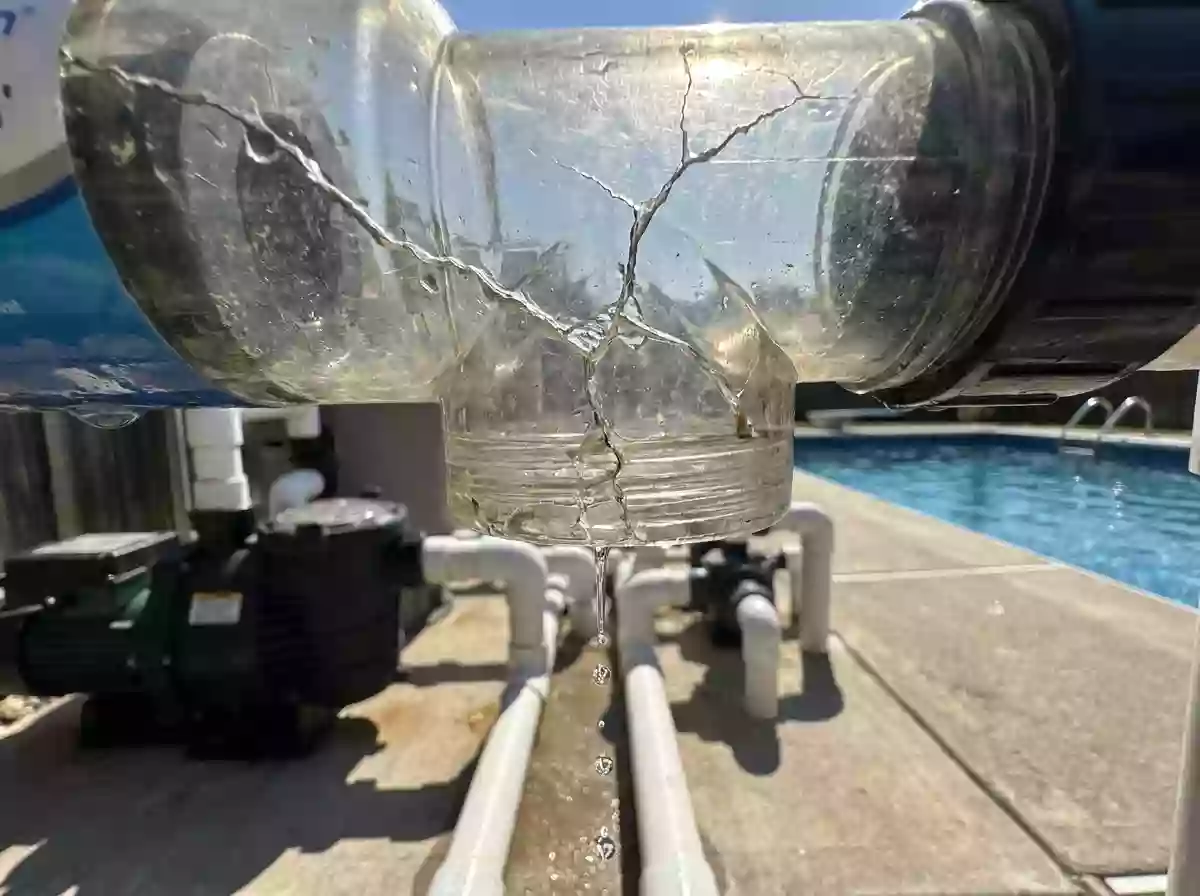
The most striking difference between residential pool salt cells and industrial OSHG (On-Site Hypochlorite Generation) systems is the housing material. Residential units predominantly utilize transparent enclosures made of Polycarbonate (PC) or Acrylic. This design allows users to visually monitor the electrode plates and confirm chlorine gas production. However, transparency comes at a cost. When exposed to outdoor UV radiation and constant system pressure, PC and Acrylic are highly susceptible to Environmental Stress Cracking (ESC). Typically, after 1–2 years of service, the failure rate spikes, and a cracked salt cell housing can render the entire system inoperable.
The Appeal and Fatal Flaw of the Clear Salt Cell Housing
If transparent housings have such inherent vulnerabilities, why do manufacturers persist with them? Primarily, these materials offer high aesthetic appeal and serve a functional diagnostic purpose: they allow the operator to witness active electrochemistry (hydrogen and chlorine bubbles) without performing a manual chlorine smell test. (For more on manual diagnostics, see our guide: The “Bucket Smell Test”: Quick Diagnostics for Technicians).
To achieve this visibility, manufacturers must use amorphous polymers like Polycarbonate or PMMA (Acrylic). While they provide clarity, these plastics have notoriously poor chemical resistance. The environment inside a salt cell is often acidic and high in oxidant concentration, which initiates a chemical attack on the polymer structure, leading to a leaking salt cell housing.
How UV Radiation Destroys PC and Acrylic Plastics
Sunlight contains high-energy UV rays that trigger a process known as photo-oxidation. This chemical reaction causes polymer chain scission—literally breaking the molecular bonds that hold the plastic together. On an outdoor equipment pad, UV stabilized plastic is essential, yet standard clear housings often lack sufficient protection.
After 12 to 24 months of exposure, you will notice the warning signs before a catastrophic failure occurs. The housing will lose its crystal-clear transparency, taking on a yellowish tint. Upon closer inspection, you will see micro-crazing—fine, spiderweb-like cracks on the surface. To the touch, the plastic becomes brittle and loses its impact resistance. This is the visual signature of a salt cell housing that has reached its breaking point.

Hydrostatic Pressure and Thermal Stress: The Breaking Point
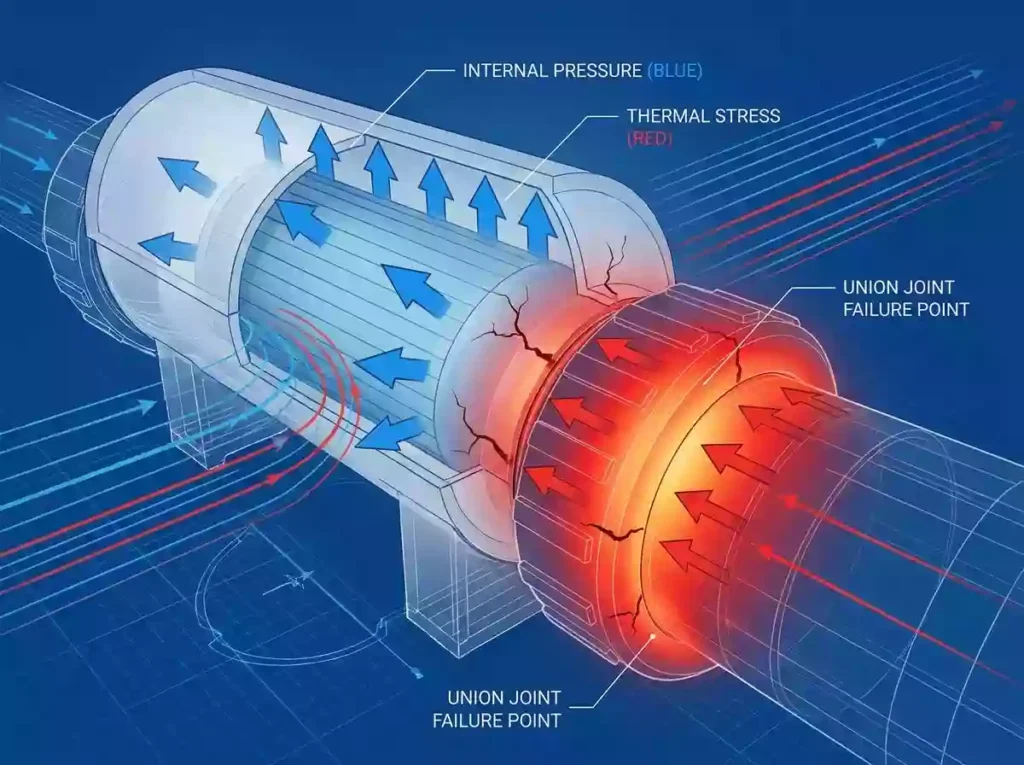
Photo-oxidation weakens the structural integrity, but it is the physical environment that causes the final rupture. When the pool pump engages, it creates significant hydrostatic pressure inside the housing. A weakened, UV-damaged shell can no longer contain this force, leading to a blowout.
Furthermore, the electrolysis process generates heat at the titanium plates. This thermal energy causes the plastic to expand. The constant cycle of expansion and contraction (thermal stress) accelerates the expansion of micro-cracks. When the internal pressure exceeds the material’s degraded tensile strength, the housing fails, causing significant water damage to the surrounding equipment.
Industrial Upgrades: Why CPVC Outperforms Clear Plastics
To resolve these durability issues, two strategies exist. First, users can shield the salt cell from direct sunlight using a protective cover or enclosure to slow down UV degradation. However, for high-demand or commercial applications, the industry standard is switching to CPVC (Chlorinated Polyvinyl Chloride) or heavy-duty UPVC.
These materials offer superior toughness and excellent pool equipment UV damage resistance. While the trade-off is losing transparency, CPVC handles higher pressure ratings and temperature fluctuations far better than Acrylic. For long-term reliability in harsh environments, opaque industrial polymers are the superior engineering choice.
Sourcing Robust Replacement Salt Cells for Your Route
If your current hardware is failing after only 1–2 years, simply replacing it with another standard OEM unit will likely lead to the same result. To break this cycle of failure, you need a replacement salt cell housing engineered for durability.
As an OEM manufacturer, Century utilizes premium, UV-stabilized resins from globally recognized suppliers. Unlike generic alternatives, our housings are designed with reinforced stress points and increased wall thickness to boost pressure ratings. By choosing Century’s high-performance replacement units, you provide your clients with hardware that lasts longer, effectively lowering your callback rates and increasing your long-term profit margins.